


Why Choose an Ac-Dc Converter for Global Sourcing?
Global sourcing is no longer only about finding the lowest unit price. It is about securing stable power conversion across markets, climates, and production conditions. An Ac-Dc Converter can transform regional mains electricity into controlled DC power for industrial equipment, medical devices, lighting systems, and consumer products. The right design supports different input ranges, stable output voltage, efficient operation, and dependable thermal performance.
Small details matter. A converter may operate inside a hot factory cabinet, beside sensitive sensors, or within a compact adapter housing. Its efficiency affects energy costs. Its protection features affect product safety. Its certification profile affects market access. EMC behavior matters too. A low-cost model can become expensive after redesigns, testing delays, or repeated field failures.
Christophe Basso, a respected power electronics author and control-design specialist, has emphasized a practical engineering principle: “A converter must be understood as a system, not merely as a circuit.” That view is valuable for international procurement. Buyers should examine topology, isolation, power density, lifecycle support, documentation, and supplier quality controls together. Datasheets alone are not enough.
The choice is rarely perfect. Trade-offs remain between size, efficiency, price, and service life. That is the uncomfortable part. A supplier with attractive samples may still lack consistent production evidence. Careful evaluation should include thermal tests, load regulation checks, waveform measurements, and traceable compliance records. When these steps are handled seriously, an Ac-Dc Converter becomes more than a component. It becomes a reliable foundation for global product development.
What Is an AC-DC Converter and How Does It Work?
Why Choose an AC-DC Converter for Global Sourcing?
An AC-DC converter changes alternating current from a wall outlet into controlled direct current. Household power rises and falls repeatedly. Electronic circuits need steadier energy. The converter manages that difference.
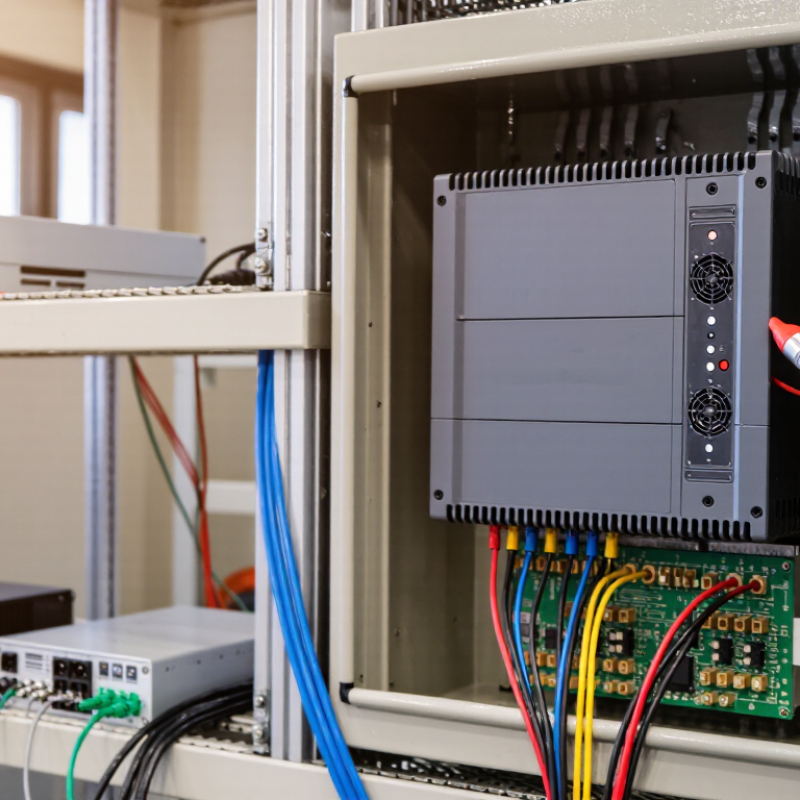
A typical unit starts with an input fuse and an electromagnetic interference filter. A rectifier then changes AC into pulsating DC. A capacitor smooths the waveform. In switching designs, electronic components rapidly control the voltage. An isolation transformer may improve safety and voltage conversion. A secondary rectifier and regulator create the final DC output. Some compact designs are non-isolated, so their safety requirements differ. The internal path is not always simple.
Input voltage matters greatly. Many sourcing projects require operation across 100–240 volts and several line frequencies. Engineers should also check output tolerance, ripple, efficiency, standby power, thermal limits, and protection features. Overvoltage, overload, and short-circuit protection can prevent costly failures. In practical evaluations, a converter may pass a bench test but fail after hours inside a warm enclosure. That detail is easy to miss. A clean specification sheet does not replace testing. Load changes, connector quality, airflow, and regional certification requirements can alter the result. Global sourcing becomes more reliable when samples are tested under real operating conditions, not only ideal laboratory conditions.

Why Global Input Compatibility Matters for Sourcing
Choosing an AC-DC converter for global sourcing is less about nominal wattage than input compatibility. A unit rated for 85–264 VAC can accept common 100, 120, 220, and 230 VAC systems. That wider window reduces redesigns, regional stock keeping, and avoidable qualification work.
The International Energy Agency’s Electricity 2024 report projects global electricity demand to grow by an average 3.4% annually from 2024 to 2026. More demand does not create one uniform grid. Voltage stability, frequency, plugs, and installation conditions still vary.
The World Bank’s Logistics Performance Index 2023 compares supply chains across 139 economies. Its findings underline a practical sourcing issue: products cross borders, but service conditions change. A compatible converter lets one platform serve multiple markets, while approved cord sets and local protection components handle regional differences.
Engineers should verify 50 Hz and 60 Hz operation, inrush current, leakage current, altitude, and conducted emissions.
Test the complete system, not only the power module.
There is a weakness in the “universal” label. A broad input range cannot compensate for poor thermal design, unstable mains, or an unsuitable enclosure. It may also increase cost slightly.
That trade-off deserves measurement. Compare efficiency at 10%, 50%, and full load, using real regional voltage profiles. IEC 62368-1 safety evaluation and applicable efficiency rules should be checked for each destination.
Documentation must state limits clearly. Vague compatibility claims create expensive surprises.
How AC-DC Converters Support Safety and Regulatory Compliance
Why Choose an AC-DC Converter for Global Sourcing?
An AC-DC converter helps equipment operate safely across different power networks. It changes incoming alternating current into controlled direct current for sensitive electronics. In practical testing, stable output voltage reduces stress on processors, sensors, and communication circuits. That matters when products face voltage fluctuations, startup surges, or long operating hours.
Safety begins with electrical isolation. Proper isolation helps separate hazardous input energy from accessible low-voltage circuits. Designers also evaluate insulation, creepage distance, clearance, grounding, and enclosure temperature. Protection features can limit damage during overloads, short circuits, and excessive heat. EMC performance matters too. A converter should reduce unwanted emissions and resist interference from nearby equipment.
Regulatory compliance requires more than a familiar label. Requirements may differ by destination, product category, installation method, and operating environment. Responsible sourcing includes reviewing test reports, technical files, markings, user instructions, and traceability records. Independent laboratory testing can expose weaknesses before shipment. That is valuable experience. Still, certification alone does not guarantee safe integration. Poor wiring, inadequate ventilation, or an unsuitable fuse can create new risks. This point is often overlooked. A reliable supplier should provide clear specifications, consistent production controls, and evidence supporting the intended markets. Buyers should also verify whether the converter suits the final system, not just the input voltage. That extra check can prevent expensive redesigns and compliance delays.
How to Compare Efficiency, Reliability, and Total Cost
Why Choose an AC-DC Converter for Global Sourcing?
Comparing AC-DC converters requires more than checking the purchase price. Efficiency affects heat, electricity use, and enclosure size. The IEA’s Electricity 2024 report estimates that data centers consumed about 460 TWh globally in 2022. Demand could exceed 1,000 TWh by 2026. Even small conversion losses deserve attention. Ask suppliers for efficiency curves, not one peak figure. A converter rated at 94% efficiency may perform differently at 20% load.
Reliability needs measurable evidence. Review MTBF conditions, thermal derating, surge protection, and field-return records. Compliance with IEC 62368-1 supports safer equipment design, but certification alone does not guarantee long service life. A practical test includes cold starts, voltage variation, vibration, and continuous operation near the expected load. I still question impressive MTBF numbers when suppliers cannot explain the test temperature. Total cost also includes freight, tariffs, spare units, installation labor, cooling, and warranty handling. One failed converter can stop an entire control cabinet.
Tips: Compare five-year ownership cost. Request samples from at least two production batches. Test at 25%, 50%, and 100% load. Check regional input ranges before ordering. Keep a small reserve stock. It may look inefficient, but downtime is usually more expensive. Record every assumption; sourcing decisions often fail quietly in the spreadsheet.
Why Choose an Ac-Dc Converter for Global Sourcing? - How to Compare Efficiency, Reliability, and Total Cost
| Comparison Dimension | Entry-Level Converter | Industrial Standard Converter | High-Efficiency Converter | Global Sourcing Consideration |
|---|---|---|---|---|
| Typical application | Basic consumer electronics and non-critical equipment | Industrial controls, networking, instrumentation, and commercial equipment | Continuous-duty systems, compact products, and energy-sensitive installations | Match the converter class to duty cycle, thermal conditions, and end-use risk. |
| Input voltage range | 100–240 V AC, 50/60 Hz | 85–264 V AC, 47–63 Hz | 85–264 V AC, 47–63 Hz, with improved input tolerance | A wide-range input supports multiple regional markets without separate power versions. |
| Typical full-load efficiency | 85–89% | 89–93% | 93–96% | Verify efficiency at 25%, 50%, 75%, and 100% load rather than relying only on the peak figure. |
| No-load or standby power | Approximately 0.30–0.75 W | Approximately 0.10–0.30 W | Approximately 0.05–0.15 W | Important for products that remain connected to mains power for long periods. |
| Power factor at rated load | Typically 0.50–0.70 for lower-power units | Typically 0.60–0.90, depending on power rating | Typically 0.90–0.99 when active power-factor correction is included | Check whether power-factor correction is required by the target market and product power level. |
| Output regulation | Typically ±3–5% | Typically ±1–3% | Typically ±0.5–1.5% | Confirm line regulation, load regulation, ripple, transient response, and minimum-load behavior. |
| Typical output ripple | Approximately 80–200 mV peak-to-peak | Approximately 30–100 mV peak-to-peak | Approximately 15–50 mV peak-to-peak | Measurement bandwidth and test load must be specified because ripple results are test-method dependent. |
| Operating temperature | 0 to 40°C typical | −10 to 50°C typical | −20 to 70°C typical, with derating | Review the derating curve, enclosure temperature, airflow, altitude, and installation orientation. |
| Protection functions | Short-circuit and over-voltage protection usually included | Short-circuit, over-current, over-voltage, and over-temperature protection | Full protection set, controlled restart, thermal monitoring, and improved fault recovery | Request protection thresholds, recovery mode, and fault-test records before approval. |
| Safety isolation | Typically reinforced or double insulation, subject to design | Reinforced insulation with documented dielectric-strength testing | Reinforced insulation with additional design margin and production verification | Confirm creepage, clearance, dielectric withstand, insulation resistance, and working-voltage ratings. |
| Indicative reliability target | Approximately 50,000–75,000 hours MTBF at 25°C | Approximately 100,000–200,000 hours MTBF at 25°C | Approximately 200,000–500,000 hours MTBF at 25°C | MTBF is a calculated reliability indicator, not a guaranteed service life; request the calculation standard and assumptions. |
| Expected service life | 3–5 years under moderate thermal stress | 5–10 years under rated conditions | 8–15 years when correctly derated and thermally managed | Electrolytic capacitor temperature and ripple current are major life-limiting factors. |
| Typical warranty term | 12–24 months | 24–36 months | 36–60 months | Compare warranty exclusions, return logistics, response time, and replacement procedures. |
| Indicative unit price at 1,000 units | US$4–8 | US$8–18 | US$16–35 | Illustrative ranges for enclosed 20–60 W designs; actual prices vary by volume, certification, enclosure, and customization. |
| Estimated annual energy cost | Approximately US$8.80 at 40 W DC output, 8 h/day, US$0.15/kWh | Approximately US$7.80 under the same assumptions | Approximately US$7.30 under the same assumptions | Use actual load profile and local electricity rates; energy savings become more meaningful at high utilization. |
| Certification documentation | May include basic safety and EMC reports | Safety, EMC, RoHS, and regional documentation generally available | Broader regional documentation, test reports, and production traceability generally available | Verify that certificates apply to the exact model, revision, input range, and production site. |
| Best total-cost profile | Lowest initial purchase cost | Balanced purchase price, efficiency, and reliability | Lowest operating loss and potentially lower maintenance cost | Evaluate purchase, certification, freight, energy, cooling, warranty, downtime, and replacement costs together. |
What to Evaluate When Choosing a Global Supplier
Why Choose an AC-DC Converter for Global Sourcing?
What to Evaluate When Choosing a Global Supplier
An AC-DC converter can support products sold across regions, but supplier selection requires more than a low price. Start by checking input range, output stability, isolation, efficiency, and thermal performance. Ask for test reports, safety documentation, and samples from the same production line. Bench testing should include voltage variation, full load, startup, and several hours of heat exposure. Small details matter. Connector fit and acoustic noise can reveal weaknesses that a spreadsheet misses.
A capable global supplier explains design limits in plain language. Request evidence of quality controls, component traceability, calibration records, and corrective-action procedures. Factory audits, process samples, and independent testing add useful confidence. Do not accept certificates without checking their scope and validity. Lead time deserves equal attention. Compare production capacity, minimum order quantities, packaging methods, and backup plans for shortages. One missed shipment can disrupt an entire assembly schedule. Communication across time zones should be measured through actual response times, not promises.
Commercial terms also need careful review. Clarify warranty coverage, failure analysis, replacement procedures, and technical support after delivery. In my sourcing experience, suppliers that document design changes are easier to trust. Still, documentation is not proof of perfection. A supplier may pass early samples and struggle during volume production. That risk deserves a pilot order, defined acceptance criteria, and periodic review. Price matters, but stable performance, transparent evidence, and practical support often protect the total project cost.


