


Top Carbonless Paper 2 Part Suppliers Worldwide

Choosing reliable Carbonless Paper 2 Part suppliers requires more than comparing prices on a spreadsheet. The strongest manufacturers combine dependable coating technology, accurate sheet sizing, stable color transfer, and responsive technical support. These details matter when a two-part invoice must produce a clean duplicate in a busy warehouse, clinic, or delivery office.

According to paper-industry specialist Mark K. Burton, “Carbonless performance is decided at the point of contact, not in the catalogue.” This practical view deserves attention. A supplier may advertise excellent sensitivity, yet poorly matched pressure settings can create pale copies or uneven writing. Buyers should request samples, inspect the top and copy sheets, and test ordinary ballpoint pressure. Small checks reveal large weaknesses.

This guide examines leading global suppliers through product consistency, production capacity, customization, packaging, and export experience. It also considers whether suppliers can maintain quality across repeated orders. That matters more than one impressive sample. Some companies offer attractive pricing but limited support after shipment. Others provide strong technical guidance but require higher minimum quantities. Neither option is automatically best.

Look closely.

Environmental documentation, coating safety information, and traceable quality procedures can strengthen supplier credibility. However, published claims should be verified through specifications, sample testing, and customer references. This article may not capture every regional producer, and supplier rankings can change as markets shift. That limitation is worth acknowledging. Readers should match the selected supplier with their printing method, order volume, delivery schedule, and required copy clarity.

Top Carbonless Paper 2 Part Suppliers Worldwide

Carbonless Paper: Structure, Uses, and Key Performance Features

Carbonless paper produces duplicate records without carbon sheets. Its chemistry is simple, but its performance depends on precise layers. The CB sheet carries microcapsules on its reverse side. Pressure breaks them and releases dye. The CF sheet receives that image through a reactive coating. A CFB sheet combines both functions. It sits between the original and final copy.

The structure supports invoices, delivery notes, purchase orders, and warehouse forms. Grand View Research’s Carbonless Paper Market report for 2024–2030 identifies invoicing and logistics as major application areas. The report also forecasts continued market growth through 2030. Smithers’ specialty paper analysis highlights dependable print transfer and document handling as important commercial requirements. Those findings match press-room practice. Clean pressure matters. So does coating uniformity.

Key performance features include image density copy sharpness low curl smooth feeding storage stability.

A reliable sheet should copy through several parts without excessive writing pressure. It should also resist offsetting during stacking. ISO 12647-2 offers useful process-control guidance for consistent print production, although it does not define every carbonless coating requirement. This distinction is often missed. Some suppliers publish impressive copy counts, yet actual results change with pen pressure, paper age, humidity, and printer settings. A controlled trial remains necessary. Even experienced buyers can overlook that weakness.
Global Market Criteria for Evaluating Carbonless Paper Suppliers

Evaluating global carbonless paper suppliers requires more than comparing price per carton. Start with technical consistency. A reliable supplier should provide basis-weight tolerances, coating specifications, sheet moisture data, and clear lot identification. Test the two-part set on the intended printer. Check image transfer, handwriting response, curl, and storage stability. Small differences become visible in a busy dispatch office.

Independent evidence matters. ISO Survey 2022 recorded more than 529,000 ISO 14001 certificates worldwide, showing the scale of environmental management adoption. However, certification alone proves little about carbonless performance. Request current audit records, product safety documents, and traceable fiber information. The FAO Forestry Production and Trade report recorded roughly 415 million tonnes of global paper and paperboard production in 2022. That volume increases the importance of responsible sourcing, efficient converting, and measurable waste control.

Commercial criteria should include lead time, minimum order quantity, export documentation, packaging protection, and claims handling. Ask for recent batch samples, not only showroom sheets. Compare results from different humidity conditions. A supplier may perform well in a laboratory, yet fail after a long sea shipment. That weakness deserves attention. Smithers’ industry forecasts also indicate continuing pressure on print suppliers to improve efficiency and sustainability, but forecasts can change quickly. Buyers should therefore review data annually, audit critical suppliers, and avoid choosing solely on a low quoted price.

Leading Two-Part Carbonless Paper Suppliers by Region

Two-part carbonless paper suppliers vary widely by region, especially in coating quality, sheet consistency, and delivery capacity. In North America, established converters often support invoice, dispatch, and service forms with dependable short-run production. They usually offer standard white-and-yellow sets, custom sizes, and practical packaging for office storage. However, minimum order quantities can be restrictive for smaller buyers.

European suppliers commonly focus on precise cutting, recyclable packaging, and documented production controls. Many serve commercial printers that require clean transfer, stable imaging, and consistent moisture levels.

In East and Southeast Asia, suppliers often provide broad capacity and competitive pricing. Their strengths include private-label converting, flexible sheet formats, and container-scale orders. Buyers should request recent samples, because surface feel and image intensity may differ between batches.

Regional options also exist across Latin America, the Middle East, Africa, and Oceania. Local suppliers may reduce transit time and simplify communication, while imported stock can offer more paper grades. My purchasing experience suggests that freight planning matters as much as the quoted paper price. A low unit cost can lose its advantage after port delays, protective packing, or currency changes. Ask for basis weight, ply bonding details, carton counts, and storage guidance. Test handwriting, impact printing, and stacked form alignment before approval. No regional model is perfect. Small suppliers may respond faster, but their backup capacity deserves careful questioning. This step is often missed.

Product Quality, Customization, and Manufacturing Capabilities

Top Carbonless Paper 2 Part Suppliers Worldwide

Reliable two-part carbonless paper depends on more than smooth printing. A quality supplier controls coating uniformity across CB and CF sheets. Poor coating can create faint duplicate copies or uneven handwriting. ISO 534 testing verifies grammage, while ISO 2470 measures brightness and optical performance. These details matter in invoices, delivery notes, and service forms.

Customization should match the user’s workflow. Suppliers may offer different sheet sizes, colors, basis weights, perforations, numbering, and corner positioning. Manufacturing capability is equally important. A modern plant should monitor coating temperature, moisture, roll tension, and slitting accuracy. According to the 2024 AF&PA Sustainability Report, paper recovery in the United States reached 60.8% in 2023. That figure does not prove every supplier is sustainable, but it highlights the importance of traceable fiber sourcing and responsible production. This assumption still needs checking.

Tips: Request a current technical data sheet, batch sample, and duplicate-image test. Compare the first and last sheets from a production roll. Ask how rejected material is handled.

Experienced buyers should also review consistency between trial orders and mass production. A supplier may deliver excellent samples, then vary the pressure response during larger runs. Ask for test records covering moisture, coating weight, curl, and image density. Custom colors require special attention because visual matching can change under office lighting. Independent laboratory testing adds confidence, especially for high-volume forms. Supplier audits are useful, but they are not perfect. Human oversight still matters.

How to Select the Right Worldwide Carbonless Paper Supplier

Selecting the right worldwide carbonless paper supplier requires more than comparing quoted prices. Begin with a physical sample. Check whether the two-part set produces clear copies with ordinary handwriting, firm pressure, and different pen types. Inspect the top sheet, coated back, and receiving sheet under bright light. Weak color transfer can create costly disputes.

Ask for technical details, including paper weight, sheet size, coating consistency, moisture resistance, packing method, and available custom formats. A reliable supplier should explain production tolerances without vague promises. Request recent quality records, traceable batch information, and practical export documents. Independent audits or recognized management certifications can add confidence, but they do not replace testing. Samples matter more.

Delivery performance also deserves close attention. Compare realistic lead times, minimum order quantities, pallet protection, and the supplier’s ability to handle repeat orders. Confirm how damaged cartons, shade differences, or incomplete quantities are handled. Clear communication is essential across time zones. Slow replies before payment may become slower replies after shipment.

Price still matters, but the lowest quote can hide thinner sheets, uneven coating, or excessive packaging waste. I once focused too heavily on unit cost and overlooked reprint risk. That was a poor measurement. A better review uses total landed cost, consistency, support, and reorder reliability. Ask for a small trial order before committing to large international volumes. Mistakes become expensive quickly.

Top Carbonless Paper 2 Part Suppliers Worldwide - How to Select the Right Worldwide Carbonless Paper Supplier

Evaluation Dimension Typical Carbonless 2-Part Requirement Recommended Benchmark What the Buyer Should Verify
Paper Construction Two sheets: a coated back sheet for the top copy and a coated front sheet for the duplicate copy. CB + CF configuration with clear image transfer at normal writing pressure. Request a production sample and confirm that the copy develops evenly across the entire writing area.
Basis Weight Carbonless sheets commonly fall within approximately 40–60 g/m² per sheet, depending on the application. Use lighter grades for high-volume forms and heavier grades where stiffness and durability are important. Check the declared grammage, moisture content, caliper, and tolerances on the technical data sheet.
Common Sheet Sizes International orders frequently use ISO A4 and A5 sizes; North American orders often use Letter and Half Letter sizes. Supplier should support both standard sizes and accurate custom slitting. Confirm cut-size tolerance, squareness, edge quality, and packing protection against moisture.
Copy Color Options White top sheets with yellow, pink, blue, or other colored duplicate sheets are widely used. Color should remain consistent between lots and should not interfere with text readability. Approve a color sample and specify acceptable color variation in the purchase contract.
Printing Compatibility Products may be supplied for offset, flexographic, laser, inkjet, or impact-printer applications, but not every grade suits every process. Select a grade specifically tested for the intended press, toner, ink, or printer type. Ask for print-trial results, recommended ink or toner settings, and guidance on paper feeding and curl control.
Image Transfer Quality The duplicate image should be legible without excessive writing pressure or visible background staining. Evaluate transfer uniformity, image density, sharpness, and resistance to unwanted marking. Test ballpoint, pencil, and impact writing under normal operating conditions before approval.
Moisture and Storage Stability Paper performance can change when exposed to high humidity, heat, direct sunlight, or unsuitable packaging. Use moisture-resistant export packaging and store the material in a stable indoor environment. Confirm packaging method, storage conditions, recommended shelf life, and handling instructions.
Minimum Order Quantity Standard stock sizes generally allow smaller orders than custom colors, custom widths, or private-label printed forms. Compare the minimum order by sheet, carton, pallet, or metric ton rather than by a single quoted unit. Request separate quantities and pricing for stock items, custom converting, printed forms, and repeat orders.
Lead-Time Planning Stocked products normally ship faster than made-to-order grades, custom sizes, or printed multi-copy forms. Require a written production lead time, packing schedule, and shipping estimate for each order type. Check whether quoted lead time begins after payment, artwork approval, raw-material confirmation, or sample approval.
Quality Documentation Professional suppliers should be able to provide product specifications, batch information, and inspection records. Use documented quality controls covering grammage, dimensions, appearance, coating, and copy performance. Request a certificate of analysis or inspection report for the actual shipment, not only a generic brochure.
Sustainability Evidence Recycled content, responsible-fiber sourcing, and recognized environmental management systems may be available depending on the product and market. Prefer claims supported by current, independently verifiable certificates or chain-of-custody documents. Verify certificate scope, validity dates, product coverage, recycled content percentage, and applicable jurisdiction.
Export and Logistics Capability Worldwide supply requires suitable export packaging, accurate shipping documents, and experience with palletized paper cargo. Compare delivered cost, packing density, freight terms, customs documentation, and damage-claim procedures. Confirm Incoterms, carton and pallet specifications, container loading method, and insurance responsibility.
Sample and Approval Process A physical sample is essential because copy performance, curl, coating feel, and printability cannot be judged reliably from photographs. Approve samples using the same printer, ink, form layout, and storage conditions used in production. Keep an approved reference sample and define the inspection method before placing a volume order.
Selection note: The specifications above are practical industry benchmarks for carbonless 2-part paper. Actual grammage, minimum order, lead time, certificates, and printing compatibility should be confirmed in the supplier’s current quotation and technical documentation.
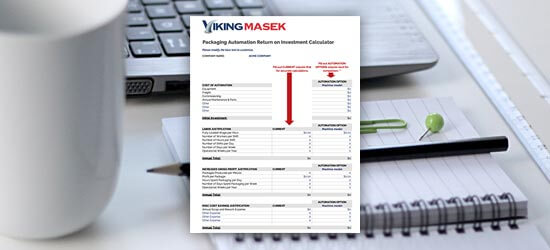
Packaging machine ROI calculator

Need help figuring out if packaging automation is right for your business?


First, start with the numbers. Download our free packing machine ROI calculator to learn how long it will take for an investment in automation to pay for itself (and much more).


Free packaging automation ROI calculator