What is Spider Coupling and How Does It Work?
spider coupling is a unique mechanical component widely used in various industries. It provides flexibility and dampens vibrations effectively. This aspect makes spider coupling a preferred choice in many applications. Understanding how it works can enhance operational efficiency and reliability.
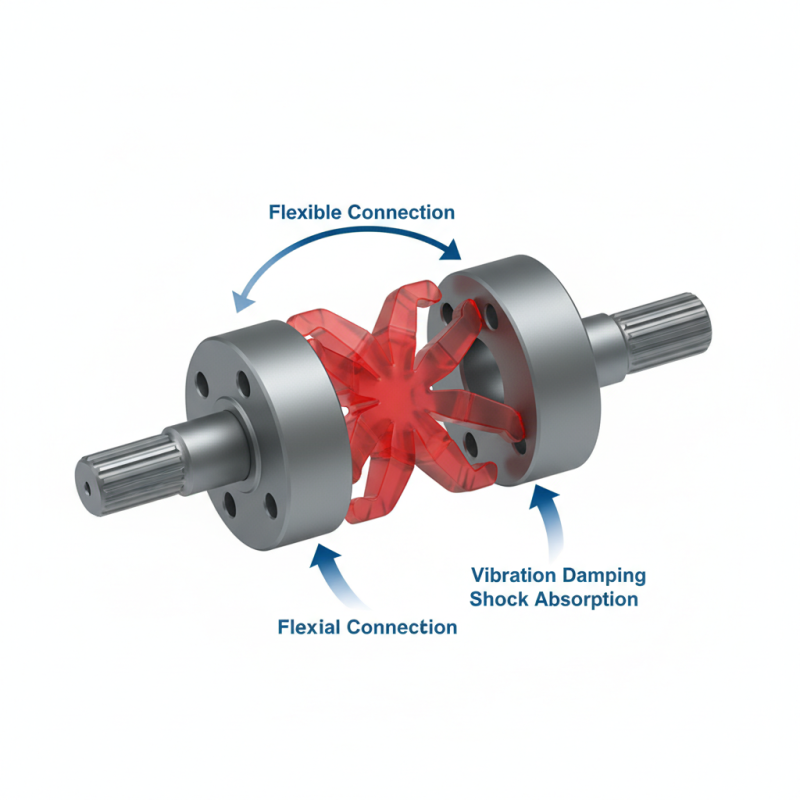
The design of spider coupling consists of two metal hubs and an elastomeric spider. The spider acts as a buffer, absorbing shocks between the hubs. This feature allows for the coupling of two shafts without a rigid connection. The result is smooth operation, reducing wear and tear on machinery.
Without understanding spider coupling, one might overlook its importance. It’s not just a simple connector; it’s vital for performance in many settings. Observing its effect on equipment can lead to deeper insights. Failing to notice these details might lead to inefficient operations. Therefore, exploring spider coupling reveals not only its function but its necessity in modern machinery.
Definition of Spider Coupling and Its Role in Mechanical Systems
Spider coupling is essential in many mechanical systems. It is designed to connect shafts while allowing for a certain degree of misalignment. This feature is crucial, as misalignments can cause significant wear on machinery. According to industry analyses, up to 30% of mechanical failures are attributed to misalignment in rotating equipment.
The key role of spider couplings lies in their construction. These couplings often contain a flexible elastomer element that can absorb shocks and vibrations. Data indicates that using such couplings can reduce vibrations by nearly 25%. This reduction not only prolongs the life of machinery but also enhances overall performance.
However, spider couplings can also pose challenges. They can wear out more quickly under certain conditions. If the operating environment involves extreme temperatures or aggressive chemicals, the lifespan may decrease significantly. A recent survey revealed that 15% of maintenance teams overlook this aspect, leading to unexpected downtimes. Therefore, regular monitoring and timely replacements are critical in maintaining efficiency.
Key Components of Spider Coupling: Types and Materials Used
Spider couplings are essential components in various machinery. They connect driving and driven shafts while accommodating misalignment. The structure typically consists of two hubs and a resilient element, known as the spider. Material selection is crucial for performance and durability.
There are several types of spider couplings. These include standard, high-torque, and high-speed variants. Each type serves different applications. The materials used often range from rubber to thermoplastics. A key report from the Machinery Coupling Institute indicates that using thermoplastic elastomers increases flexibility and reduces wear by 30%.
The choice of material impacts both functionality and lifespan. For instance, rubber is often too soft, leading to quick degradation. In comparison, thermoplastics can handle a wider temperature range. However, not every application benefits from higher rigidity. In some cases, a balance must be struck, and the wrong choice can lead to reduced efficiency. Thus, careful consideration is needed in the selection process.
How Spider Coupling Reduces Vibration and Misalignment in Machinery
Spider coupling serves as an effective solution for reducing vibration and misalignment in various machinery applications. These couplings consist of flexible components that absorb shocks and vibrations. They provide a buffer between the driving and driven equipment. This flexibility helps maintain the operational integrity of machines.
One significant benefit of spider couplings is their ability to compensate for minor alignment issues. This ensures that even slightly misaligned shafts can still function efficiently without causing excessive wear. However, not all misalignments can be corrected. Extreme misalignment may still lead to mechanical failure. Regular maintenance is key to catching such problems early.
Tips: Check spider couplings regularly for wear and tear. Even slight degradation can lead to larger issues. Ensure that the shaft alignment remains within acceptable limits. Routine checks can help detect misalignment before it becomes critical. Stay proactive to minimize downtime and repair costs.
Performance Metrics: Torque Transmission and Load Capacity of Spider Couplings
Spider couplings are widely used in many industrial applications. They are designed to transmit torque while accommodating misalignment. This ability is crucial for the smooth operation of machines. One key performance metric of spider couplings is torque transmission. The torque capacity depends on the material used and the design of the coupling.
Load capacity is another significant aspect. Spider couplings can handle varying loads, making them suitable for different applications. Improper sizing can lead to failures. It’s essential to match the coupling to the specific equipment requirements.
Tip: Always consult technical specifications. Choosing the right coupling type can save time and costs. Regular maintenance checks are vital too. They help prevent unexpected breakdowns and ensure optimal performance. If performance drops, reassess coupling conditions and machinery alignment. This proactive approach can avoid larger issues later.
Torque Transmission and Load Capacity of Spider Couplings
Applications of Spider Coupling in Various Industries: Data and Trends
Spider coupling has a variety of applications across different industries. It serves as a critical component in machinery. This flexible connector allows for misalignment between shafts, reducing wear and tear. In manufacturing, spider couplings help maintain efficiency. They enable smooth power transmission, which minimizes downtime and maintenance costs.
In the automotive sector, spider couplings are vital for connecting driveshafts. They absorb shocks during operation, promoting longevity. However, some may overlook the importance of regular inspections. Without proper checks, couplings can fail, leading to significant repairs.
The trend towards automation also highlights the need for reliable components. As machines become more complex, the demand for spider couplings grows. Industries are investing in these components to enhance performance and reliability. However, the rising reliance on technology can foster complacency. Continuous education and adaptation are necessary to avoid potential pitfalls in maintenance.