


What Are Luggage Replacement Wheels and How Do They Work?

luggage replacement wheels are small components with a major effect on travel comfort. They support the suitcase, absorb uneven movement, and guide its direction through airports, stations, and hotel corridors. When a wheel cracks, locks, or develops a flat spot, replacing the entire suitcase may seem unnecessary. In many cases, a properly matched replacement restores smooth movement at a lower cost.

These wheels usually work through an axle, housing, bearing, or simple bushing. Spinner wheels rotate in several directions, while inline wheels mainly roll forward and backward. The design affects stability, noise, turning effort, and durability. Experienced luggage repair specialists check the wheel diameter, width, axle length, mounting holes, and housing shape before installation. A wheel that looks similar may still sit incorrectly or rub against the case.

Good luggage replacement wheels should match the suitcase’s load needs and travel conditions. Hard polyurethane wheels often handle frequent use better than softer plastic alternatives. Bearings can improve rolling performance, but they may not solve a poorly aligned frame. Small details matter.

This guide explains how replacement wheels function and how to evaluate compatible parts. It also considers installation, common wear patterns, and practical testing after repair. However, replacement is not always the best answer. A cracked wheel mount or weakened suitcase shell can make a new wheel unreliable. That possibility deserves attention before spending money. A careful inspection may prevent another failure during a crowded trip.
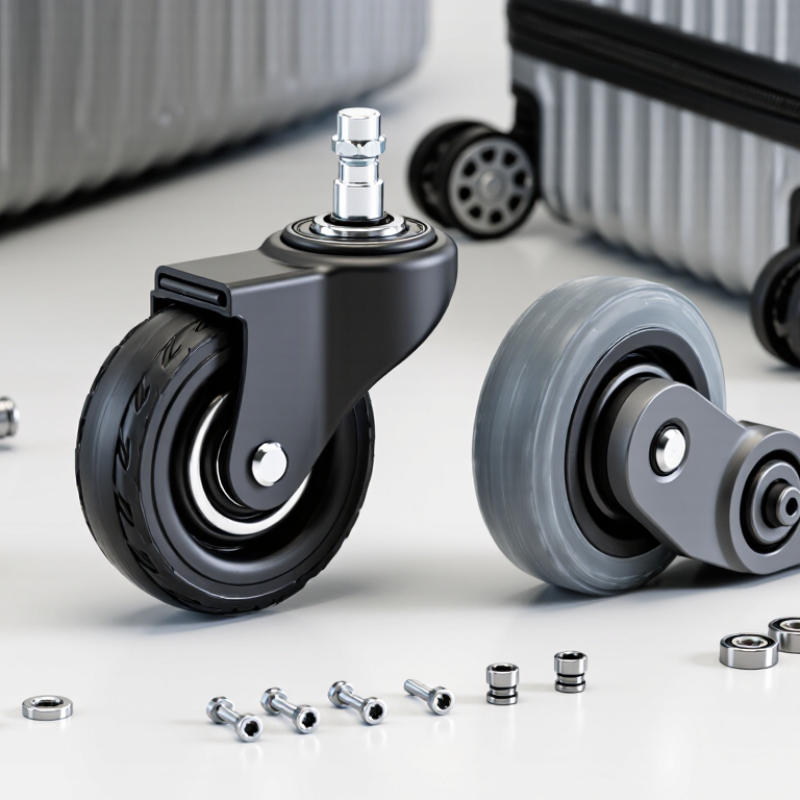
What Are Luggage Replacement Wheels and How Do They Work?

What Are Luggage Replacement Wheels?

Luggage replacement wheels are detachable wheels designed to restore a suitcase’s movement without replacing the entire case. They usually include a wheel, axle, bearings, and sometimes a complete wheel housing. Some models use two wheels on each corner, while others use one larger wheel. Spinner wheels rotate in several directions, making crowded airports easier to navigate. Inline wheels roll mainly forward and backward.

The wheel turns around its axle as the bearing reduces friction. A firm housing keeps the wheel aligned under weight. Correct compatibility matters more than appearance. Measure the wheel diameter, width, axle length, and mounting-hole spacing before ordering. Small differences can prevent a secure fit. Check the housing for cracks too. A new wheel cannot repair a broken mounting frame.

From repair experience, worn wheels often show flat spots, uneven edges, or a rough rolling sound. Remove hair and grit before judging the wheel. Tighten the axle firmly, but do not crush the bearing. After installation, test the suitcase on tile, carpet, and a slightly uneven surface. It should track straight and remain stable when loaded. One detail is easy to miss: left and right wheel assemblies may not be identical. Some measurements may also change after wear. Rechecking them is sensible, even when the old wheel seems usable.

What Are Luggage Replacement Wheels and How Do They Work?

Luggage replacement wheels are removable wheel assemblies used to restore a suitcase when its original wheels are worn, cracked, or jammed. The chart below shows common replacement-wheel diameter ranges by luggage size. Larger luggage generally uses larger wheels to support greater loads and roll more smoothly over uneven surfaces.

Replacement wheels work by transferring the suitcase’s weight through an axle, bearing, or wheel housing. The wheel rotates around the axle, while the housing keeps it aligned with the luggage frame. Before installation, the replacement wheel should match the original wheel diameter, width, axle size, mounting pattern, and rotation direction.

Why Luggage Wheels Need Replacing

Luggage replacement wheels are removable wheel assemblies designed to restore smooth movement after the original wheels wear out. They usually include a wheel, axle, bearings, and mounting hardware. The wheel carries the case’s weight, while the bearings reduce friction during rolling. Some designs rotate fully, and others move in one direction. Compatibility matters more than appearance.

Why Luggage Wheels Need Replacing

Wheels gradually lose their shape from uneven pavements, stairs, and heavy loads. A worn wheel may develop flat spots, cracks, or deep cuts across its tread. These defects create vibration and make the luggage pull toward one side. Small problems can become expensive ones. A damaged wheel can strain the axle, wheel housing, and suitcase frame.

In practical repairs, a scraping sound often signals trapped grit or a failing bearing. A loose wheel may indicate a bent axle rather than simple wear. Check the wheel before replacing it. Sometimes cleaning and tightening solves the problem. Sometimes it does not.

Replace the assembly when rolling remains rough, unstable, or noisy after inspection. Use the original wheel size, axle length, and mounting pattern whenever possible. A poor fit may cause rubbing against the case. It may also reduce balance on uneven ground. I have found that visual checks can be misleading; a wheel may look acceptable but wobble under load. Test the luggage with several kilograms inside it, then roll it slowly across a hard floor. That small test reveals faults quickly.

How Replacement Wheels Work

Replacement luggage wheels are small rolling assemblies designed to restore movement when original wheels crack, wobble, or wear down. Most include a wheel, axle, washers, and mounting hardware. Some luggage uses fixed wheels, while other cases use swivel wheels that rotate in several directions. The wheel type determines how the suitcase turns and carries weight.

How replacement wheels work is fairly simple. The axle passes through the wheel’s center and holds it against the luggage frame. Washers reduce friction and help prevent side-to-side movement. In a swivel assembly, a rotating plate beneath the wheel allows the case to change direction smoothly.

When you pull the handle, your force transfers through the frame, axle, and wheel to the floor. A damaged bearing or loose bolt interrupts that movement, often causing scraping or uneven rolling.

Fit comes first. Measure the wheel diameter, width, axle length, and mounting-hole spacing before buying a replacement. A wheel can look right and still fail. I have seen suitable-looking parts sit too close to the case, rubbing during every turn. That detail matters.

Check the frame for cracks, tighten fasteners carefully, and test the suitcase on tile and carpet. Replacement work is not always perfect; a slightly different wheel may change the case’s height or balance. If rolling feels rough after installation, stop and inspect the alignment rather than forcing it.

Types of Luggage Replacement Wheels

Luggage replacement wheels restore movement when original wheels crack, flatten, or begin wobbling. They attach through an axle, screws, or a complete wheel housing. The correct replacement must match the case’s mounting points, wheel width, axle diameter, and clearance. A small mismatch can make the suitcase drag.

Types of Luggage Replacement Wheels

Spinner wheels rotate in every direction, so they work well in airports and narrow aisles. They usually offer smooth handling but may expose more parts to impact. Inline wheels sit in a straight line and roll like small skate wheels. They handle rough pavement better, although turning requires more effort. Fixed wheels are simple and sturdy, while dual wheels can improve balance on heavier luggage. Rubber wheels feel quieter indoors. Hard polyurethane wheels often roll faster and resist surface wear. In my repair experience, wheel material matters less than proper alignment. I have sometimes chosen a durable wheel that felt too stiff on tile floors.

Tips: Measure the old wheel before ordering. Check the screw spacing and axle length. Spin the new wheel by hand. It should move freely without side-to-side play. Tighten hardware firmly, but do not crush the wheel housing. Test the suitcase on carpet, tile, and pavement. A wheel that works well indoors may still vibrate outdoors. Replacement work is not always perfect, so recheck alignment after the first trip.

What Are Luggage Replacement Wheels and How Do They Work? - Types of Luggage Replacement Wheels

Wheel Type How It Works Typical Configuration Main Advantages Limitations Key Replacement Measurements Best Use Case
Inline Skate-Style Wheels A single wheel on each side of the case rolls in one direction. Bearings or a simple axle allow the wheel to rotate smoothly. Usually two wheels on the rear or lower corners of the luggage. Simple construction, good straight-line stability, and generally easy servicing. The case normally must be tilted, and turning requires lifting or pivoting the luggage. Wheel diameter and width, axle diameter, axle length, mounting-hole spacing, and housing clearance. Two-wheel suitcases used mainly on smooth floors and pavements.
Spinner Wheels Each wheel rotates around its own axle and is mounted in a swivel housing that turns horizontally, allowing movement in multiple directions. Commonly four wheels, with one swivel assembly near each bottom corner. Can roll upright, move sideways, and turn with relatively little pulling effort. Swivel housings add weight and may be more exposed to impact or debris. Complete housing shape, screw or rivet pattern, wheel diameter, wheel width, axle size, and total assembly height. Frequent travel through airports, stations, hotels, and other smooth indoor surfaces.
Fixed Directional Wheels The wheel axle is secured in a fixed bracket, so the wheel rolls forward and backward without swiveling. One or two wheels mounted on each lower side or corner of a case. Stable tracking, straightforward construction, and fewer moving parts than a spinner assembly. Less maneuverable in tight spaces and usually requires the luggage to be tilted. Bracket dimensions, axle diameter and length, wheel offset, mounting-hole spacing, and wheel clearance. Large cases that are mainly pulled in a straight line over firm surfaces.
Dual or Twin Wheels Two wheels share one housing or axle, distributing the case load across a wider contact area. Often used in swivel assemblies, with paired wheels positioned side by side. Improved balance, added load distribution, and greater stability when standing upright. Replacement parts are less universal because the housing and wheel spacing must match. Total housing width, individual wheel diameter, gap between wheels, axle dimensions, and mounting pattern. Spinner luggage that needs additional stability and load distribution.
Single Replacement Wheel Only the worn wheel is replaced while the original bracket, housing, axle, and fasteners remain in use. One wheel fitted into an existing compatible assembly. Usually costs less and creates less waste than replacing the complete wheel unit. It is unsuitable when the housing, axle, or mounting structure is also damaged. Outer diameter, tread width, bore diameter, hub width, axle length, and bearing type if present. Cases with a sound wheel housing and a worn, cracked, or flat-spotted wheel.
Complete Wheel Assembly The replacement includes the wheel plus its bracket or swivel housing, allowing the entire damaged unit to be removed and installed. Available as fixed brackets or swivel modules, depending on the luggage design. Useful when the original housing is bent, cracked, seized, or missing mounting hardware. Usually costs more and requires an exact match for the case attachment points. Overall height, housing length and width, mounting-hole pattern, screw or rivet size, and wheel dimensions. Luggage with structural damage around the wheel or a non-serviceable original unit.
Polyurethane-Tread Wheels A resilient polyurethane outer tread rolls against the ground while a harder hub supports the axle or bearing. Used in both fixed and spinner replacement designs. Quieter and more resilient than many hard plastic wheels, with good abrasion resistance on smooth surfaces. The tread can wear, chip, or develop flat spots under heavy use or on rough ground. Tread diameter and width, hub bore, hub width, axle compatibility, and clearance inside the housing. Travelers seeking lower rolling noise on hard indoor floors.
Hard Plastic Wheels A molded plastic wheel rotates around an axle, with the wheel body providing the main rolling surface. Found in fixed and swivel luggage systems, especially on lightweight cases. Lightweight, economical, and resistant to moisture and many common travel conditions. Can transmit more vibration and noise and may crack or wear faster on rough surfaces. Wheel diameter, width, bore diameter, hub width, axle dimensions, and housing fit. Budget-conscious repairs and luggage used mostly on smooth indoor flooring.

Compatibility note: Before ordering a replacement, compare the wheel diameter, width, axle and bore dimensions, housing height, mounting-hole spacing, and the direction of the original assembly. Matching the wheel type alone does not guarantee a correct fit.

How to Choose and Install Replacement Wheels

Choosing luggage replacement wheels starts with accurate measurements, not appearance. Check the wheel diameter, width, axle length, and mounting-hole distance. Compare these measurements with the suitcase’s original parts. A wheel that looks suitable may still rub against the frame. Consider the case weight, travel frequency, and floor conditions. Twin wheels usually improve stability, while larger wheels roll more smoothly over uneven surfaces. Soft materials can reduce noise, but harder wheels may resist wear better.

Inspect the wheel housing before ordering replacements. Cracks, bent brackets, or loose screws may require more than a simple wheel change. I once replaced a worn wheel without checking the axle length. It turned freely, but the suitcase pulled sideways. That mistake was avoidable. Measure twice. Also check whether the wheel is fixed with screws, rivets, or a removable axle. The replacement must match the fastening method, or installation may damage the housing.

During installation, work on a clean, flat surface. Remove the old wheel carefully, keeping washers and spacers in their original order. Install the new wheel without forcing the axle. Tighten screws firmly, but do not crush plastic components. Spin the wheel by hand and check for side-to-side movement. Then roll the empty suitcase across tile and carpet. Add a moderate load and test it again. If the case drifts, scrapes, or makes a clicking sound, stop and inspect the alignment. Sometimes the wheel is fine; the frame is not.

Article Source:

Packaging machine ROI calculator

Need help figuring out if packaging automation is right for your business?


First, start with the numbers. Download our free packing machine ROI calculator to learn how long it will take for an investment in automation to pay for itself (and much more).


Free packaging automation ROI calculator