


How to Choose the Right Circuit Breaker?

Choosing the right Circuit Breaker is a practical safety decision, not a simple matter of matching numbers. The correct device must protect conductors, equipment, and people under real operating conditions. A breaker that looks suitable may still fail when temperature, moisture, or motor starting current changes the circuit.

Begin with the circuit’s voltage, continuous load, wire size, and fault current rating. Check the panel manufacturer’s compatibility requirements. For example, a workshop motor may draw a brief surge when starting. Its Circuit Breaker must tolerate that surge without ignoring a genuine fault. A residential lighting circuit has different needs from an industrial feeder.

Small details matter. A loose terminal can create heat behind the panel cover. An oversized breaker can allow cable insulation to deteriorate before the breaker trips. It sounds obvious, but these errors still appear during inspections. Experience teaches caution, although experience alone is not enough.

Reliable selection also depends on local electrical codes, recognized testing marks, and the installation environment. Compare trip curves, interrupting capacity, pole configuration, and residual-current protection where required. Product data should come from the manufacturer or a qualified distributor, not an unverified listing.

Do not guess.

A licensed electrician can confirm calculations, coordination, and safe installation practices. The final choice should reflect the entire system, not one attractive specification. Even professionals may need to revisit an assumption when the site conditions differ from the drawings. That careful pause can prevent nuisance trips, equipment damage, and serious electrical hazards.
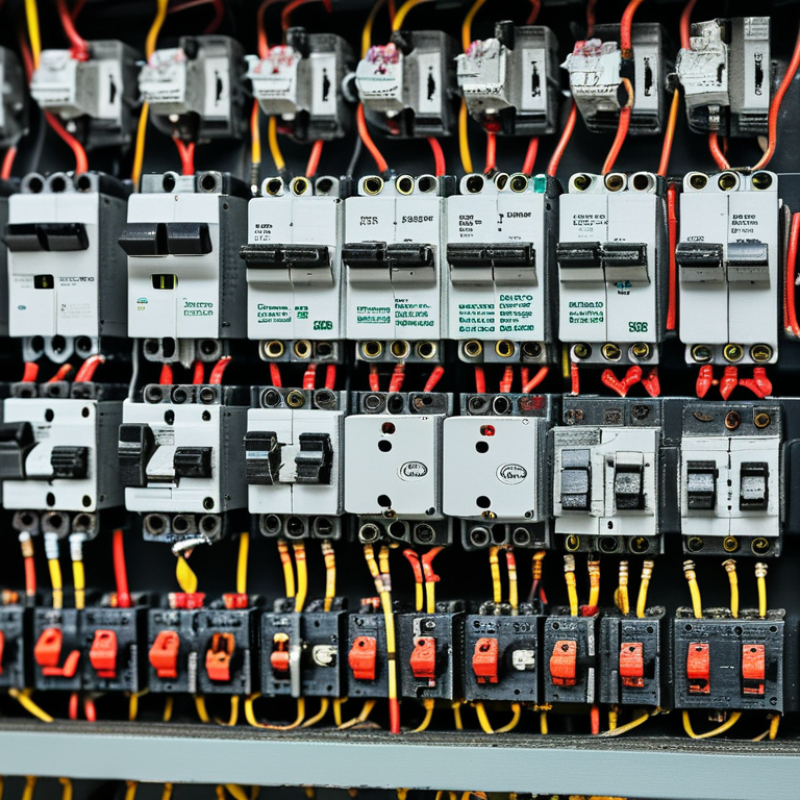
How to Choose the Right Circuit Breaker?

Understanding Circuit Breaker Types and Their Applications

How to Choose the Right Circuit Breaker?

Understanding circuit breaker types and their applications begins with the load and the installation environment. A miniature circuit breaker suits lighting circuits, sockets, and small household loads. It protects against overloads and short circuits. A molded-case circuit breaker handles higher currents in workshops, commercial panels, and larger distribution systems. It often provides adjustable protection settings.

Residual-current devices focus on leakage protection. They can reduce shock risks in wet areas, outdoor circuits, and locations with portable equipment.

An RCBO combines overcurrent and residual-current protection in one device. This saves panel space, but it may cost more. Each type has a specific job. Choosing by appearance alone is risky.

Tips: Check the system voltage, rated current, pole arrangement, and breaking capacity. Match the trip curve to the load. Motors can create brief starting currents, while sensitive electronics may need careful coordination. Confirm cable capacity before selecting a breaker. The breaker must protect the cable, not merely support the appliance. A common field mistake is choosing a higher rating to stop nuisance trips. That can leave wiring dangerously under-protected. Review local electrical requirements and installation conditions. Heat, dust, enclosure size, and altitude can affect performance. When the data is uncertain, ask a qualified electrician to test the circuit and verify the final selection.

Assessing Voltage, Current, and Interrupting Capacity Requirements

How to Choose the Right Circuit Breaker?

Assessing Voltage, Current, and Interrupting Capacity Requirements

Selecting a circuit breaker starts with the system voltage. The breaker’s voltage rating must match or exceed the circuit voltage. A 240-volt circuit needs equipment rated for that level. Never rely on physical fit alone. A breaker may fit the panel but still be unsuitable.

Current requirements need closer examination. Check the equipment’s rated load, conductor ampacity, and continuous operating time. For many installations, continuous loads require a 125 percent calculation, although local electrical rules control. A motor, heater, or compressor can also create temporary starting current. I once reviewed a small workshop circuit that looked adequate on paper. The startup surge caused repeated trips. The final load assessment revealed an underestimated motor demand. The first calculation was incomplete.

Interrupting capacity is equally important. This rating shows how much fault current the breaker can safely stop. Compare it with the available short-circuit current at the installation point. Larger service equipment may deliver far more fault energy than expected. Use utility data, transformer information, and a qualified fault-current study when necessary.

Do not assume a higher ampere rating provides higher interrupting capacity. It may not. Verify markings, installation instructions, and applicable standards before approval. A licensed electrician should inspect conductor sizing, terminal temperature ratings, and panel compatibility. Small details matter.

Selecting the Correct Pole Configuration and Trip Characteristics

How to Choose the Right Circuit Breaker?

Selecting the correct pole configuration starts with the system voltage and grounding arrangement. A single-pole breaker usually protects one line-to-neutral circuit. A two-pole breaker disconnects two live conductors together, which is essential for many line-to-line loads. Three-pole and four-pole devices suit three-phase systems, but neutral switching requires careful engineering. IEC 60364-4-43 emphasizes coordinated overcurrent protection, not simply matching the breaker’s ampere rating.

Trip characteristics matter just as much. Under IEC 60898-1, Type B breakers typically trip magnetically at 3–5 times rated current. Type C responds around 5–10 times, while Type D may require 10–20 times. Type B often fits lighting and resistive loads. Type C can handle moderate motor or transformer inrush. Type D needs strong fault-current capacity and accurate calculations. A neat rule can still fail.

The installation’s prospective short-circuit current must not exceed the breaker’s rated breaking capacity. NFPA’s Fire Loss in the United States During 2023 reported 1,388,500 fires and about 22.1 billion dollars in direct property damage. That report is not a breaker-selection study, but it shows why protection coordination deserves attention. Field checks should include conductor size, ambient temperature, cable grouping, load diversity, and available fault current. I would also challenge one common assumption: a higher trip curve is not automatically better. It may prevent nuisance trips, yet leave equipment exposed if the circuit cannot clear faults quickly.

How to Choose the Right Circuit Breaker?

Select the correct pole configuration for the number of conductors that must be switched or protected, then match the trip characteristic to the expected inrush current of the load.

Chart: Typical instantaneous magnetic trip ranges defined for miniature circuit breakers under IEC 60898-1. The values are expressed as multiples of the circuit breaker's rated current (In).

Pole configuration Typical use
1-pole Single live conductor in a single-phase circuit
2-pole Single-phase circuits where both live and neutral conductors require simultaneous isolation
3-pole Three-phase circuits without a switched neutral
4-pole Three-phase circuits where the neutral must also be switched

Curve B is generally suited to low-inrush resistive and lighting loads, curve C is commonly selected for general-purpose circuits with moderate starting current, and curve D is intended for loads with high inrush current such as transformers or motors. Always verify the installation requirements, prospective fault current, conductor capacity, and applicable local standards before selection.

Checking Installation Conditions, Compatibility, and Safety Standards

Choosing the right circuit breaker starts with the installation environment, not appearance. Check the panel’s available space, enclosure type, ambient temperature, moisture, and ventilation. A breaker installed near heat-producing equipment may require a corrected rating. Dusty or damp locations need suitable protection. The circuit voltage, phase arrangement, and number of poles must also match the electrical system.

Compatibility is equally important. Confirm the conductor size, expected load, short-circuit current, and breaker interrupting capacity. The trip characteristic should protect the wiring without causing unnecessary shutdowns. For example, motors may create brief starting currents, while lighting circuits usually behave differently. The breaker must also suit the system’s AC or DC application. A device can fit the panel and still be electrically unsuitable. That mistake is easy to miss.

Tips: Read the panel documentation and the breaker’s technical data carefully. Compare terminal capacity with the actual cable size. Check recognized safety standards, such as IEC or UL requirements, where applicable. Follow local electrical codes and use a qualified electrician for testing and installation. Field checks should include torque verification, insulation condition, and correct labeling. Never rely only on color or shape. A tidy installation is not proof of a safe choice. Ratings can also change after temperature adjustment, which is often overlooked. Retrofits may appear simple, but compatibility needs a second review.

Comparing Product Quality, Maintenance Needs, and Long-Term Value

How to Choose the Right Circuit Breaker?

Product quality affects safety, reliability, and replacement costs. Look beyond the purchase price. Check the breaker’s rated current, short-circuit capacity, endurance, temperature performance, and test documentation. IEC 60947-2 provides a useful benchmark for low-voltage breakers.

NFPA’s Home Structure Fires Involving Electrical Distribution and Lighting Equipment report recorded roughly 31,700 related home fires annually from 2016 to 2020. That figure makes poor connections and weak protection difficult to dismiss. Choose equipment with verified test results and clear installation instructions. Quality is visible in details, such as firm terminals, consistent operation, and durable insulation. Small details matter.

Maintenance needs also shape long-term value. NFPA 70B emphasizes documented electrical maintenance programs, inspection schedules, and condition-based testing. A practical plan may include torque checks, thermal scanning, mechanical operation tests, and insulation assessments. Uptime Institute’s 2024 Annual Outage Analysis reported that 54% of respondents experienced an outage with significant business impact. A reliable breaker cannot prevent every outage, but predictable maintenance can reduce avoidable failures.

Replacement parts and technical support deserve attention. So does access space. A difficult breaker takes longer to inspect and increases labor costs. I have seen low-cost selections become expensive after repeated trips, unavailable accessories, or premature replacement. That assumption is not always fair, but it deserves examination. No checklist is perfect. Evaluate the breaker across its full service life, not only on installation day.

How to Choose the Right Circuit Breaker? - Comparing Product Quality, Maintenance Needs, and Long-Term Value
Circuit Breaker Type Typical Current Range Typical Short-Circuit Breaking Capacity Protection Functions Product Quality Indicators Maintenance Needs Typical Service Life Long-Term Value Best-Fit Applications
Miniature Circuit Breaker (MCB) Typically 0.5–125 A Commonly 4.5–10 kA; higher ratings are available Overload and short-circuit protection Clear trip indication, secure terminals, consistent tripping characteristics, temperature resistance, and compliance with IEC 60898-1 Low. Inspect terminals during scheduled electrical maintenance and test the circuit after a significant fault or overheating event. Commonly 10–20 years in normal indoor service; operating-cycle life depends on the design and switching frequency. High for standard circuits Residential circuits, lighting, socket outlets, and small commercial loads
Residual-Current Circuit Breaker with Overcurrent Protection (RCBO) Typically 6–125 A Commonly 4.5–10 kA Overload, short-circuit, and residual-current protection; common residual-current sensitivity is 30 mA for personal protection Reliable residual-current sensing, correct trip-time performance, a functional test button, clear neutral-line identification, and compliance with IEC 61009-1 Low to moderate. Test the residual-current function periodically using the test button and inspect terminals during routine maintenance. Commonly 10–15 years in normal conditions; performance may be reduced by moisture, contamination, or frequent fault operation. High where shock or leakage protection is required Wet areas, outdoor circuits, residential final circuits, and equipment requiring individual leakage protection
Molded-Case Circuit Breaker (MCCB) Typically 16–1,600 A Commonly 18–100 kA, depending on frame size and voltage Overload and short-circuit protection; optional adjustable protection, earth-fault protection, and accessories Stable thermal and magnetic performance, robust housing, adjustable trip settings, reliable accessories, adequate temperature derating data, and compliance with IEC 60947-2 Moderate. Check torque, insulation condition, trip settings, enclosure ventilation, and signs of overheating. Periodic secondary or primary injection testing may be appropriate for critical installations. Commonly 15–25 years in suitable service; switching endurance varies significantly by frame size, interrupting duty, and operating mechanism. High for industrial distribution Industrial feeders, motor control panels, commercial buildings, and distribution boards with higher fault levels
Air Circuit Breaker (ACB) Typically 630–6,300 A Commonly 42–150 kA, depending on voltage and frame design Adjustable long-time, short-time, instantaneous, and often earth-fault protection; supports selectivity and coordination studies Strong mechanical construction, dependable draw-out contacts, accurate electronic trip-unit settings, tested short-circuit performance, and compliance with IEC 60947-2 Moderate to high. Inspect and clean primary contacts, test trip functions, lubricate mechanisms where specified, verify interlocks, and perform periodic electrical tests. Commonly 15–25 years when professionally maintained; operating-cycle life depends on the mechanism, fault interruptions, and switching duty. High for critical high-current systems Main switchboards, data centers, large commercial facilities, utilities, and industrial low-voltage power distribution
Residual-Current Circuit Breaker (RCCB) Typically 16–125 A Short-circuit protection must be provided by a separate upstream device Residual-current protection only; does not provide overload or short-circuit protection Correct residual-current sensitivity, dependable test-button operation, suitable immunity to nuisance tripping, and compliance with IEC 61008-1 Low to moderate. Test periodically, verify correct upstream overcurrent protection, and investigate repeated nuisance trips. Commonly 10–15 years in normal conditions, subject to environmental conditions and fault frequency. Good when coordinated correctly Circuits where separate overcurrent protection is already installed and multiple downstream circuits require residual-current protection
Selection note: Actual ratings, breaking capacities, temperature limits, operating-cycle endurance, and maintenance intervals vary by system voltage, installation environment, fault level, duty cycle, and applicable local standards. Confirm the final selection through a coordination study and the device manufacturer’s technical documentation.
Packaging machine ROI calculator

Need help figuring out if packaging automation is right for your business?


First, start with the numbers. Download our free packing machine ROI calculator to learn how long it will take for an investment in automation to pay for itself (and much more).


Free packaging automation ROI calculator