


How to Choose the Right Medium Voltage Drive?
Choosing the right medium voltage drive is not a simple product comparison. It is a plant reliability decision.
Peter Herweck, former Schneider Electric CEO, described the industrial direction clearly: “The future is electric, digital, and sustainable.” His observation also applies to medium voltage drive selection. A suitable drive must reduce energy waste, support dependable operation, and communicate with modern control systems. Those goals sound obvious. They are not always easy to balance.
Start with the motor and process. Check voltage, rated power, starting torque, speed range, overload demand, and duty cycle. A conveyor, pump, compressor, and crusher create different stresses. A drive sized only from motor horsepower may fail during heavy starts. That mistake remains surprisingly common.
The installation environment matters just as much. Review altitude, ambient temperature, dust, humidity, cooling requirements, and available floor space. Harmonic performance deserves attention too. Poorly assessed harmonics can affect transformers, protection equipment, and nearby controls.
Reliability depends on more than the drive itself. Examine bypass arrangements, input isolation, cooling-fan redundancy, spare-part access, and service response. Ask how technicians will troubleshoot the unit at 2 a.m. That question is practical.
Digital features can improve predictive maintenance, but connectivity is not automatically intelligence. Data must be usable. It should reveal temperature trends, insulation concerns, fault history, and load changes.
The final choice may still involve compromise. The lowest purchase price can produce higher lifecycle costs. The most advanced system may exceed the plant’s skills and budget. A careful medium voltage drive evaluation compares efficiency, maintainability, safety, compatibility, and total ownership cost—not impressive specifications alone.
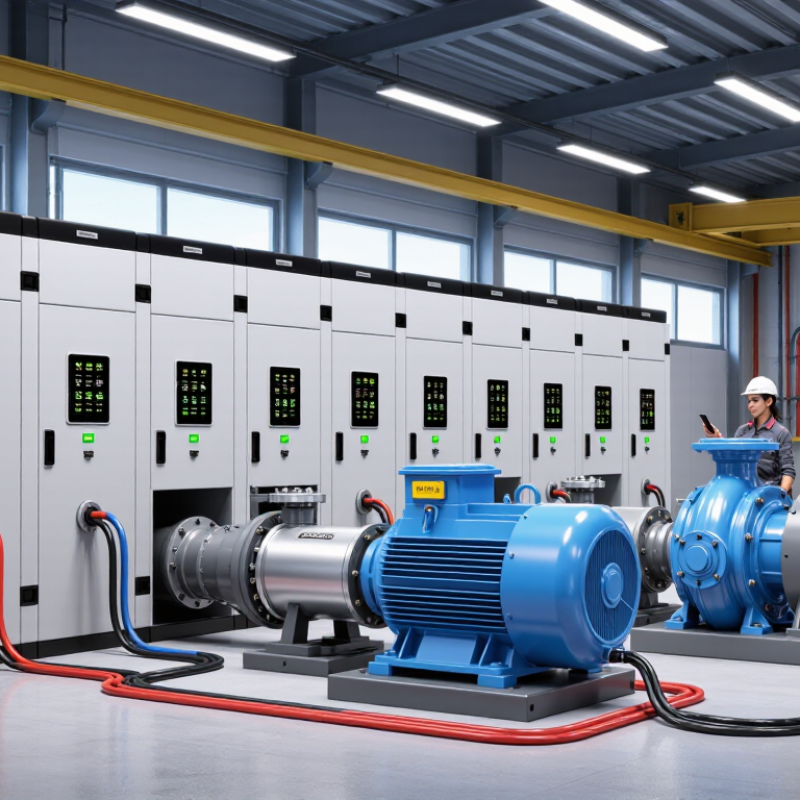
Define the Motor Duty: Power, Speed, Torque, and 1–10 MW Load Range
Choosing a medium voltage drive starts with the motor duty, not the drive catalog. Record rated power, operating speed, torque, acceleration time, and load variation across the full 1–10 MW range. A 6 MW compressor running at constant speed needs a different duty profile from a 2 MW conveyor facing frequent starts. The nameplate is only the beginning.
Torque reveals the real demand. Fans and pumps often follow variable-torque behavior, while crushers, mills, and conveyors may require high starting torque. Check the complete speed-torque curve, not just rated horsepower. The U.S. Department of Energy reports that motor systems consume more than 70% of industrial electricity in the United States. Small efficiency errors become expensive at megawatt scale. Very expensive.
The IEA has reported that electric motor systems use roughly half of global electricity, making correct sizing an operational decision, not a procurement detail. For a 1–10 MW application, verify overload capacity, minimum operating speed, short-circuit conditions, and regenerative events. Site experience matters here: a drive sized only for average load may trip during a cold start or material surge. That assumption deserves review. Also question the process data. Measured torque, speed trends, and start frequency are more reliable than a single calculated value. Select the medium voltage class after confirming motor insulation, cable length, harmonics, cooling, and the actual duty cycle.

Match the Drive Voltage to Common 3.3–13.8 kV Motor Systems
How to Choose the Right Medium Voltage Drive?
Match the Drive Voltage to Common 3.3–13.8 kV Motor Systems
Choosing a medium voltage drive starts with the motor nameplate, not the available switchgear. Common systems use 3.3, 4.16, 6.6, 11, or 13.8 kV motors. The drive output class should match the motor’s rated voltage and insulation system. Do not guess. A 6.6 kV motor may suffer insulation stress from an unsuitable waveform, even when it runs initially. Confirm input voltage separately, because the plant supply and motor voltage may differ. Transformer requirements can change installation costs and fault protection.
Review the motor’s starting torque, full-load current, speed range, and overload duty. Fans and pumps usually need different control behavior than crushers or conveyors. Check cable length, shielding, grounding, dv/dt stress, and reflected-wave limits before purchase. At 13.8 kV, insulation coordination deserves special attention. Ask for verified efficiency data at the actual operating point, not only at full load. That gap matters. Protection settings must coordinate with upstream breakers and the motor’s thermal limits.
Experienced project teams also examine bypass operation, maintenance access, cooling, and spare-part support. A drive can match 11 kV electrically and still fail operationally. Site temperature, altitude, dust, and humidity affect enclosure and cooling decisions. Independent technical review is valuable when several voltage classes appear acceptable. One practical mistake is treating 4.16 kV as interchangeable with 3.3 kV. They are close on paper, but not automatically equivalent. Record every assumption in the specification. Then challenge it.
Compare Topologies for 95–98% Efficiency and Reliable Operation
How to Choose the Right Medium Voltage Drive?
Efficiency claims deserve careful reading. The U.S. Department of Energy’s Motor Systems Market Assessment reports that motor-driven equipment consumes about 68% of industrial electricity in the United States. A medium voltage drive reaching 95–98% converter efficiency can therefore reduce substantial losses. However, input transformers, output filters, cables, and motor loading still affect total system performance. IEC 61800-9-2 provides a useful framework for evaluating these complete drive systems, not only the converter cabinet.
A two-level voltage-source topology is compact and familiar, but switching stress and output voltage steps can increase motor insulation demands. Three-level neutral-point-clamped designs reduce voltage steps and often lower harmonic distortion. They may also improve efficiency around partial load, where many plants operate.
Cascaded H-bridge topologies use series-connected cells, offering scalable voltage ratings and built-in redundancy. That flexibility comes with more components, more control dependencies, and more maintenance points.
The IEA’s Energy Efficiency 2023 report states that electric motor systems consume more than 40% of global electricity. That figure makes topology selection an operating decision, not just a purchase decision. In field evaluations, I would compare efficiency at 25%, 50%, 75%, and 100% load, because a single peak-efficiency number can mislead. Thermal margins, bypass behavior, spare-cell strategy, and harmonic performance matter just as much. Sometimes, the most efficient topology on paper is not the most reliable choice in a dusty, hot pump room.
Verify Harmonic Performance Against IEEE 519’s 5% Voltage THD Limit
How to Choose the Right Medium Voltage Drive?
Verify Harmonic Performance Against IEEE 519’s 5% Voltage THD Limit
A medium voltage drive should be evaluated at the point of common coupling, not only at its input terminals. IEEE 519-2014 sets a 5% voltage THD limit for systems rated up to 69 kV. This limit applies under steady operating conditions. It does not guarantee clean power during every plant event.
Request a harmonic study using the real transformer impedance, cable length, motor loading, and utility fault level. Compare voltage THD at 25%, 50%, 75%, and 100% load. A drive may pass at full load but exceed 5% during light-load operation. That detail is often missed. IEEE 519 also limits individual voltage harmonics to 3% for these systems, according to Table 1.
The U.S. Department of Energy reports that motor-driven equipment can represent roughly 70% of industrial electricity consumption. Harmonic losses therefore deserve more than a checklist review. Ask for measured impedance scans, not only calculated results. Resonance near the fifth or seventh harmonic can change after capacitor banks are installed. EPRI power-quality guidance also stresses site measurement because actual distortion depends on the complete electrical network.
Leave room for uncertainty. Models can be imperfect. Require commissioning measurements at the PCC with calibrated instruments, documented operating loads, and one week of trend data. A practical selection should show margin below 5%, rather than passing by a narrow fraction.
Evaluate Cooling, Bypass, Safety, Serviceability, and Total Lifecycle Cost
How to Choose the Right Medium Voltage Drive?
Evaluate Cooling, Bypass, Safety, Serviceability, and Total Lifecycle Cost
Cooling performance deserves careful attention in medium voltage drive selection. Air-cooled systems may suit clean, conditioned rooms with stable temperatures. Dusty mills and humid pump stations create tougher conditions. Heat leaves evidence. Inspect fan airflow, cabinet temperature, filter access, and alarm history. A thermal scan during full-load operation can reveal hot terminals or blocked ventilation. Water-cooled designs may reduce room heat, but they add pumps, piping, and leak risks. Ask for maintenance intervals, coolant requirements, and tested temperature limits.
Safety features should match real operating routines, not only specification sheets. Check door interlocks, grounding provisions, arc-energy mitigation, emergency isolation, and stored-energy discharge procedures. A bypass can keep a critical motor running during drive maintenance. However, transfer logic must prevent unsafe switching and damaging voltage conditions. Test the sequence with operations and maintenance personnel. Their practical feedback often exposes weak assumptions.
Serviceability directly affects production losses. Can technicians replace cooling fans without removing adjacent equipment? Are diagnostic records easy to retrieve? Clear wiring labels and accessible test points reduce troubleshooting time. Price the drive over its working life, including energy use, spare parts, training, inspections, downtime, and disposal. I once underestimated filter replacement labor, and the purchase savings disappeared within two years. That mistake still influences my evaluations. Real operating data is better than optimistic estimates.


