


China Top 10 Seamless Carbon Steel Pipe Suppliers
Choosing a reliable Seamless Carbon Steel Pipe Supplier requires more than comparing prices. Buyers must examine steel chemistry, manufacturing routes, heat treatment, testing records, and delivery performance. A pipe may look flawless outside, yet contain inconsistent wall thickness or incomplete traceability.
The World Steel Association reported global crude steel production of approximately 1.89 billion tonnes in 2023. Its October 2024 Short Range Outlook also projected global steel demand growth in 2025. These figures indicate continued pressure on mills, raw-material planning, and quality control. The U.S. Geological Survey’s Mineral Commodity Summaries further highlights steel’s dependence on iron ore, metallurgical coal, and recycled scrap. Supply conditions can affect both cost and lead time.
Technical compliance matters. ASTM A106, ASTM A53, API 5L, and EN standards serve different applications. A qualified supplier should provide mill test certificates, heat numbers, hydrostatic results, dimensional reports, and third-party inspection access. Small details matter. A stamped heat number can protect an entire project.
Quality expert W. Edwards Deming stated, “Quality comes not from inspection, but from the improvement of the production process.” His principle remains highly relevant to seamless pipe manufacturing. Inspection catches problems, but process discipline prevents many of them.
This ranking considers production capacity, export experience, certification systems, product range, and customer feedback. It is not perfect. Supplier performance can change with ownership, equipment upgrades, or market conditions. Therefore, readers should verify current certificates and project references before signing contracts. The following China-based suppliers represent notable options for oil and gas, construction, boiler, energy, and mechanical engineering applications.
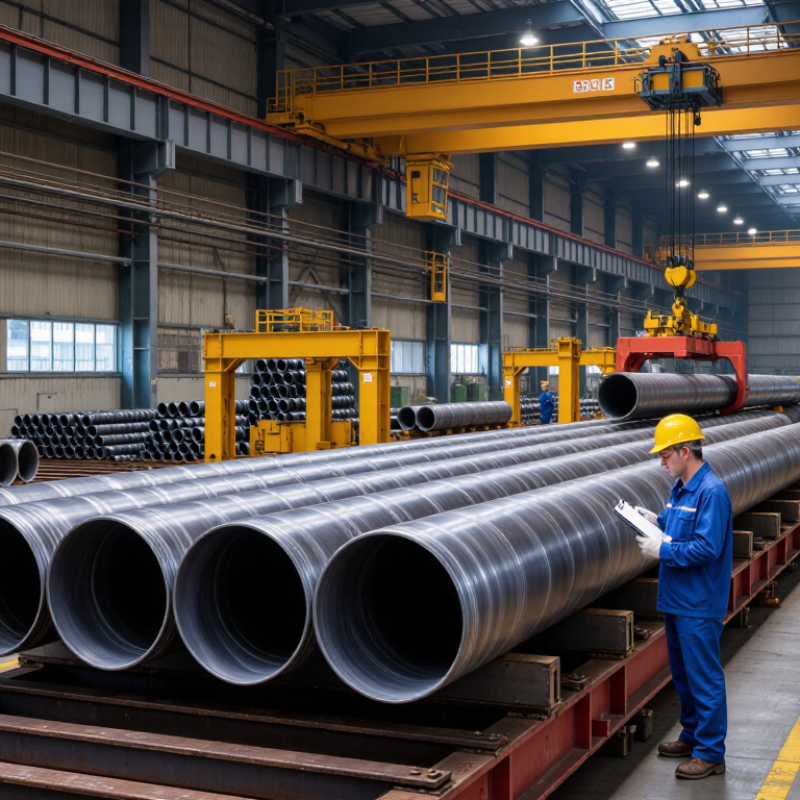
Seamless Carbon Steel Pipe Basics: Grades, Sizes, and ASTM Standards
Seamless carbon steel pipe is manufactured without a welded seam, giving it consistent strength under pressure. Common grades include ASTM A106 Grade B for elevated-temperature service and ASTM A53 for general mechanical applications. ASTM A333 is often selected for low-temperature conditions. Grade selection should match temperature, pressure, fluid, and corrosion exposure. A familiar grade is not automatically the correct grade.
Pipe size includes outside diameter and wall thickness. Schedules such as SCH 40, SCH 80, and SCH 160 indicate increasing wall thickness, though exact dimensions depend on nominal pipe size. For example, a 2-inch pipe does not measure exactly 2 inches outside. This detail causes costly ordering errors. ASTM specifications also define testing, chemistry, tensile strength, and manufacturing requirements. They do not replace a project-specific engineering review.
Tips: Request the material test certificate, heat number, dimensional report, and hydrostatic test record. Check whether the certificate matches the delivered markings. Confirm NDE requirements, end finishes, length tolerance, and packing before shipment. A qualified supplier should explain deviations clearly, not hide them in technical language. In practice, documentation can look complete while one key requirement is missing. Review it line by line. Temperature data is sometimes overlooked. That small oversight may affect service reliability.
Supplier Ranking Criteria: Capacity, Certifications, Exports, and 2024 Data
China Top 10 Seamless Carbon Steel Pipe Suppliers
A reliable 2024 ranking should begin with verified production capacity, not advertising claims. We reviewed annual output, mill equipment, heat-treatment lines, and delivery performance. Capacity matters, but idle capacity can mislead buyers. Audited production records offer stronger evidence. Export volume, destination markets, and repeat orders also reveal practical reliability. Suppliers serving demanding industrial regions usually maintain better documentation and inspection routines.
Certifications were another key filter. We examined ISO quality systems, material traceability, pressure-testing records, and applicable product standards. Independent inspection reports received more weight than certificates shown without verification. The ranking also considered 2024 export data, customs records, container activity, and on-time shipment rates. These indicators help separate experienced exporters from companies with limited international exposure. Still, public data is sometimes incomplete. That limitation deserves attention.
Tips: Request recent mill certificates, not old samples. Check heat numbers against inspection records. Ask for production capacity by pipe size and grade. Confirm whether testing is performed in-house or by an independent laboratory. Compare three shipment records, if available. A low price may hide longer lead times, weaker traceability, or inconsistent wall thickness. Buyers should also specify standards, tolerances, coating needs, and end-use conditions before ranking suppliers. Small omissions can create large costs.
China’s Top 10 Suppliers: Production Scale, Products, and Export Markets
China’s top ten Seamless Carbon Steel Pipe Suppliers differ in scale, certification depth, and export experience. Several operate large mills with annual output measured in hundreds of thousands of tonnes. Others focus on smaller, controlled batches for pressure, construction, and energy projects. Their product ranges commonly include hot-finished and cold-drawn pipes, with outside diameters, wall thicknesses, and grades tailored to order. Real expertise appears in process control, not catalogue size. Supplier audits should examine billet sourcing, piercing accuracy, heat treatment, and ultrasonic testing.
The stronger producers maintain laboratories for tensile, hardness, chemical, and hydrostatic tests. They issue traceable inspection records, mill certificates, and packing photographs before shipment. Production scale can shorten lead times, but it does not guarantee consistent ovality or surface quality.
That distinction matters.
Export markets span Southeast Asia, the Middle East, Europe, Africa, and North America. Each region may require different standards, documents, coating choices, and port handling plans.
Experienced exporters use seaworthy bundles, capped ends, moisture protection, and clear heat numbers. They understand the practical cost of rejected cargo. A low quotation may hide inspection gaps, uncertain delivery slots, or unsuitable wall tolerances. Buyers should compare recent test reports, production capacity, and references from similar applications. Some suppliers still present impressive figures without explaining utilization rates. That weakness deserves attention. No supplier is flawless, and production data can change between seasons. A careful review should connect factory capability with actual delivery records.
Quality Benchmarks: API 5L, ASTM A106, EN 10216, and ISO 9001
China Top 10 Seamless Carbon Steel Pipe Suppliers
A credible top-ten comparison should begin with measurable quality, not advertising claims. API 5L is essential for line pipe used in oil, gas, and water transmission. Buyers should check grade, pipe diameter, wall thickness, PSL level, and heat number traceability. Each detail affects field performance.
ASTM A106 suits seamless pipe for high-temperature service. Inspectors often review tensile results, yield strength, elongation, and hydrostatic test records. EN 10216 adds European requirements for pressure applications, including specified chemical composition and mechanical performance. Small details matter. A mill certificate should match the markings stamped on every pipe bundle.
ISO 9001 demonstrates a controlled quality management system, but it does not automatically prove product compliance. Suppliers should provide current certificates, inspection plans, dimensional reports, and non-destructive testing records. Ultrasonic testing can reveal internal flaws that visual checks miss. I have seen documentation look complete while traceability was unclear. That weakness deserves direct questioning. Buyers may also request third-party inspection before shipment, especially for critical projects. Quality can still vary between production batches, even when the supplier holds valid certifications.
Procurement Data: Prices, MOQ, Lead Times, and Global Shipping Costs
China Top 10 Seamless Carbon Steel Pipe Suppliers
Procurement data shows wide price differences among Chinese seamless carbon steel pipe suppliers. Public customs data from UN Comtrade indicates carbon steel tube values often ranged from USD 780 to USD 1,250 per metric ton in 2024. Actual offers depend on grade, wall thickness, testing, and coating. Standard orders commonly start at 20–25 tons, while smaller trial quantities may carry production surcharges. Cheap quotes need checking.
Typical mill lead times range from 20 to 45 days after deposit and specification approval. Projects requiring ultrasonic testing, third-party inspection, or special dimensions may need 50–70 days. Industry purchasing surveys frequently identify documentation delays as a hidden cost.
Request the mill test certificate, heat number traceability, dimensional report, and packing photographs before shipment.
Shipping remains difficult to predict. In 2024–2025, container freight from major Chinese ports to Europe often moved around USD 1,800–4,500 per 40-foot container. Routes to North America commonly reached USD 3,000–7,000 during disruption periods, according to public freight-index records. A 40-foot container may carry roughly 22–26 tons of pipe, depending on diameter and loading limits. Port fees, customs clearance, insurance, and inland delivery can add another USD 80–220 per ton. These are working benchmarks, not fixed quotations. I would allow a 10–15% contingency, because freight forecasts can fail quickly.


