Top Automated Packaging Line Solutions for Your Business Needs?
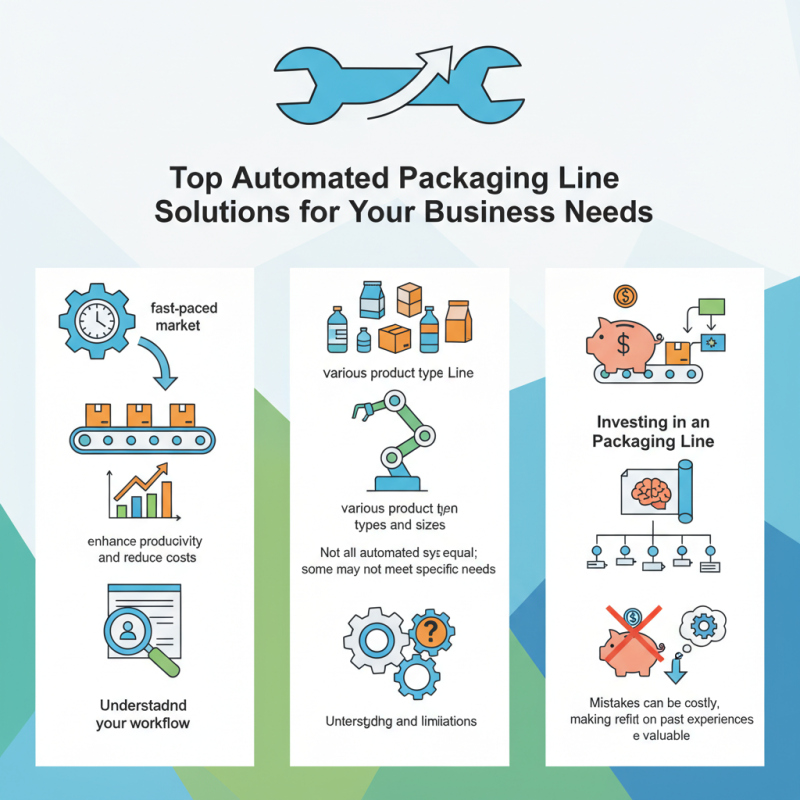
In today’s fast-paced market, efficiency is key. An Automated Packaging Line can streamline your operations. Choosing the right solution can enhance productivity and reduce costs.
Businesses face unique challenges, especially in packaging. Solutions must adapt to various product types and sizes. Not all automated systems are equal; some may not meet specific needs. Identifying strengths and limitations is crucial.
Investing in an Automated Packaging Line involves more than just purchasing equipment. It requires understanding your workflow. Careful analysis can reveal whether automation will truly benefit your operations. Mistakes can be costly, making reflection on past experiences valuable.
Overview of Automated Packaging Line Solutions
Automated packaging lines have transformed the manufacturing sector significantly. A recent study by Smithers Pira revealed that the global market for automated packaging equipment is expected to exceed $50 billion by 2026. This growth highlights the increasing demand for efficiency and productivity in packaging processes.
Implementing automated solutions can reduce labor costs by up to 30%. This increase in efficiency can shorten production cycles. Many companies experience quicker turnaround times, which leads to higher customer satisfaction. Furthermore, automated packaging can enhance product safety and compliance with industry standards. This ensures that products are packaged correctly and securely.
However, some businesses face challenges when transitioning to automated systems. The initial investment for these technologies can be high. Integrating new machines into existing operations may require staff training and adjustments. These factors can lead to temporary disruptions. Companies must weigh the benefits against these potential drawbacks to make informed decisions for their future.
Benefits of Implementing Automated Packaging Systems
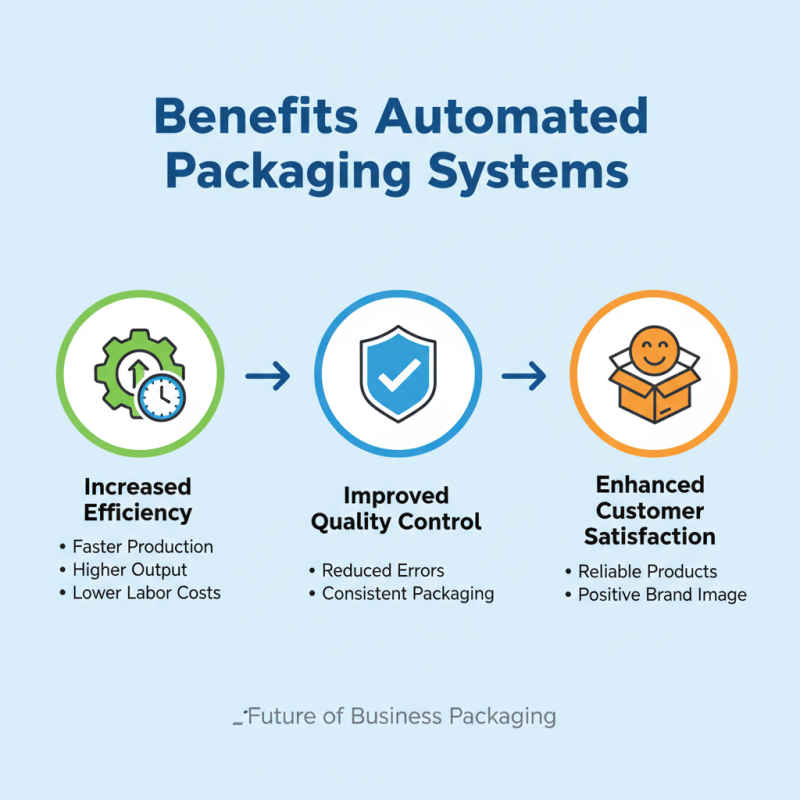
Automated packaging systems bring numerous benefits to businesses. First, they enhance efficiency. By reducing manual labor, these systems can speed up production. This results in higher output and lower labor costs. Additionally, automation minimizes human error, leading to better quality control. Products are packaged consistently, which can improve customer satisfaction.
Another key advantage is flexibility. Automated systems can adapt to various product types and packaging styles. This is crucial for businesses with diverse product lines. However, companies must also consider the initial investment. While automation may save money in the long run, upfront costs can be high. It's important to assess whether the investment aligns with your business goals.
Moreover, implementing automated packaging requires training. Employees must learn to operate the systems effectively. Neglecting this aspect can lead to operational challenges. Businesses should ensure a balance between technology and human expertise. This integration is vital for maximizing the benefits of automation while fostering a collaborative environment.
Key Features to Consider in Packaging Line Solutions
When evaluating automated packaging line solutions, some key features can significantly impact your operational efficiency. One critical aspect is flexibility. Your packaging line should adapt to various product sizes and shapes. This flexibility will allow your business to respond quickly to market changes. You may find that a rigid system limits your production capabilities.
Another important feature is speed and efficiency. Fast packaging can enhance productivity. However, a balance is necessary. Excessive speed may compromise quality. An efficient system should minimize downtime and maximize output without sacrificing standards. It’s vital to assess how a potential solution handles bottlenecks and delays.
Additionally, consider the integration of technology. Smart packaging lines incorporate data analytics and automation. This technology can streamline processes and improve decision-making. Nonetheless, complexity can sometimes hinder usability. Training staff to operate advanced systems can be a challenge. It’s crucial to weigh the benefits of innovation against the potential learning curve for your team.
Top Automated Packaging Line Solutions for Your Business Needs
| Solution Type | Speed (Units/Min) | Flexibility | Integration Capability | Cost (USD) |
|---|---|---|---|---|
| Automated Carton Erector | 10-20 | Medium | High | $15,000 - $30,000 |
| Automatic Filling Machine | 30-50 | High | Medium | $20,000 - $50,000 |
| Labeling Machine | 40-100 | High | Low | $10,000 - $25,000 |
| Automated Palletizer | 20-50 | Medium | High | $30,000 - $80,000 |
| Shrink Wrapping Machine | 20-40 | Medium | Medium | $15,000 - $35,000 |
Top Providers of Automated Packaging Equipment
The demand for automated packaging solutions is growing rapidly. Businesses often seek reliable equipment that meets their specific needs. Choosing the right provider is crucial for optimizing packaging processes. Look for companies that offer a range of options tailored to different industries. This way, you can ensure a good fit for your products.
Consider what features you truly need. Some businesses focus on speed, while others prioritize precision. This evaluation will guide your decision. Be cautious of providers that promise everything. Sometimes, less is more. Reliable solutions often come with a few essential features rather than an overwhelming array of options.
Tips: Collaborate with experts to assess your workflow before investing. They can identify potential bottlenecks and recommend appropriate machines. Remember to request demonstrations. Seeing the equipment in action can reveal much about its efficiency and ease of use. Keep in mind that automation might require adjustments in your operations, so be prepared for some trial and error.
Top Automated Packaging Line Solutions for Your Business Needs
This chart illustrates the market demand for various automated packaging line solutions, showcasing units sold for each type of equipment. The data reflects the growing need for efficiency and automation in packaging processes across different industries.
Integrating Automation with Existing Production Processes
Integrating automation into existing production processes can significantly enhance efficiency and productivity. Many businesses face challenges when transitioning to automated systems. It's essential to assess current workflows and identify areas that can benefit from technology. For instance, manual packing often causes delays and errors. Introducing automated packing solutions may require some initial adjustments but can lead to long-term gains.
A critical aspect is ensuring compatibility between new systems and existing machinery. This integration may involve customizations to fit unique production lines. Training employees to work with automated systems is another significant hurdle. Employees may initially struggle to adapt. Yet, with proper training and support, they can become proficient, ultimately maximizing the potential of automation.
It's crucial to remain flexible throughout this process. Businesses must be prepared to re-evaluate their approaches as they implement new technologies. This may include fine-tuning the automation process based on performance metrics and employee feedback. Automation should not be viewed as a one-size-fits-all solution, but rather as a tool that requires continuous improvement and adaptation.
Related Posts
-
Maximize Your Reach at the 137th Canton Fair with Cutting Edge Automated Packaging Equipment
-
10 Reasons Why Best Packaging Automation Equipment Can Transform Your Production Efficiency
-
5 Key Reasons the Best Used Packaging Equipment Saves You 30% on Operational Costs
-
Understanding the Future: How Packaging Equipment Systems Are Revolutionizing Industry Efficiency
-
Unlocking Excellence: How China's Top Bag Filling Machines are Revolutionizing Global Supply Chains
-
Exceptional Powder Packing Machines: Crafted in China, Empowering Global Industries