2026 Top Sheet Metal Parts Manufacturers for Global Buyers
Global buyers are rethinking how they source Sheet Metal Parts in 2026. Price still matters. It is no longer enough.
Recent industry reports show why. Grand View Research identifies steady growth in global sheet metal fabrication services, driven by automotive, electronics, construction, and industrial equipment demand. Deloitte’s 2024 Smart Manufacturing and Operations Survey found that 86% of manufacturers view smart manufacturing as a major competitiveness driver. These figures point toward a more connected supply chain, with digital drawings, automated inspection, and real-time production tracking becoming practical expectations.
Quality remains the difficult part. W. Edwards Deming, a respected manufacturing quality expert, stated, “Quality comes not from inspection, but from the improvement of the production process.” His principle fits Sheet Metal Parts sourcing closely. A clean laser cut cannot compensate for poor tolerances, weak material traceability, or inconsistent bending. A polished sample can also hide unstable mass production.
This guide reviews the 2026 Top Sheet Metal Parts Manufacturers for Global Buyers. It considers manufacturing experience, equipment capability, certification practices, engineering support, lead times, and export reliability. The comparison is useful, but not perfect. Supplier rankings can change with capacity, raw-material prices, regional risks, and customer requirements.
Look closely at the details. Check burrs around holes. Review bend-angle consistency. Ask how rejected parts are handled. The lowest quotation may not be the lowest total cost. Reliability often appears after the first shipment, not during a sales call.
What Defines a Leading Sheet Metal Parts Manufacturer in 2026
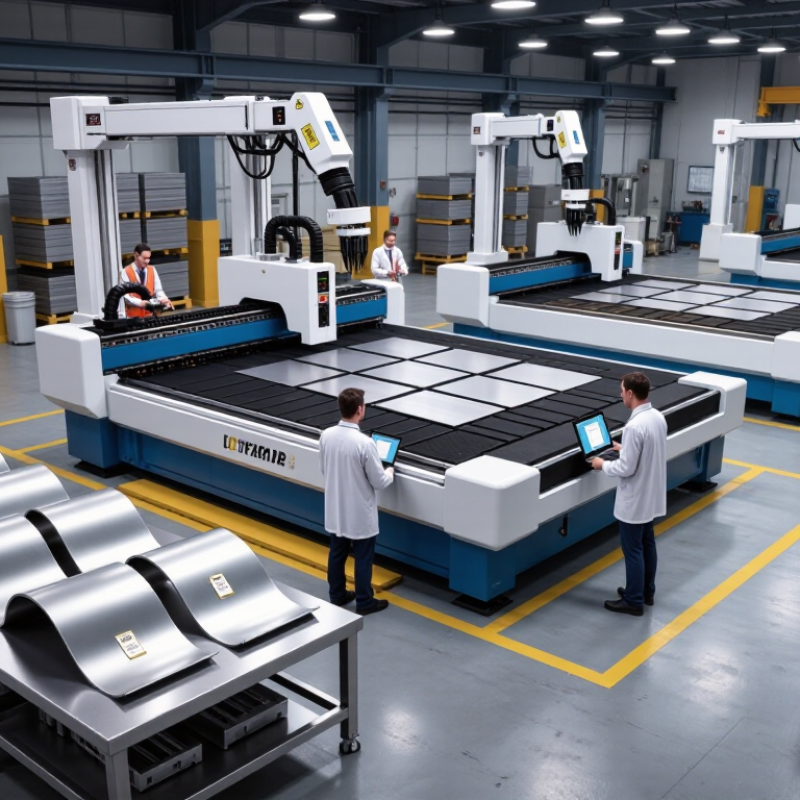
What defines a leading sheet metal parts manufacturer in 2026? Not machinery alone. Reliable suppliers combine laser cutting, CNC bending, welding, and surface treatment with disciplined process control. The International Federation of Robotics reported 541,302 industrial robots were installed worldwide in 2023. Automation matters, but skilled operators still protect edge quality, bend accuracy, and weld consistency.
Quality must be visible. A capable manufacturer provides material certificates, first-article inspection reports, dimensional records, and lot traceability. ISO 9001-based systems support repeatable production, while ISO 14001 helps monitor environmental impacts. Buyers should also examine nonconformance data, corrective-action speed, and inspection equipment calibration. Certificates can look impressive. Factory evidence matters more.
Digital readiness now separates strong partners from ordinary job shops. A 2024 global smart manufacturing survey found that most manufacturers were increasing investment in connected production and artificial intelligence. For sheet metal buyers, this means quicker quotations, live production updates, and earlier warnings about capacity risks. Yet digital systems are not perfect. Poor drawings, unclear tolerances, and rushed approvals still create expensive rework. The best suppliers ask uncomfortable questions before cutting material, test difficult features on sample parts, and openly explain where their process may fail. Reliability is built in those small conversations.
Key Manufacturing Processes and Production Capabilities
Modern sheet metal manufacturing depends on matching each design with the right process. Laser cutting creates clean profiles for prototypes and complex parts. CNC punching suits repeated holes and larger production runs. Press brake bending then forms accurate angles, often within tight tolerance ranges. For thicker components, controlled welding adds strength without excessive distortion.
Reliable manufacturers usually support several production stages under one quality system. They may handle stainless steel, aluminum, galvanized steel, and coated materials. Capabilities can include deburring, tapping, countersinking, powder coating, assembly, and dimensional inspection. Coordinate measuring equipment helps verify critical features. Still, no process is perfect. Heat, tool wear, and material variation can affect results. A drawing may look complete, yet hide an impractical bend radius or difficult welding sequence.
Tips: Confirm material grade, thickness, surface finish, and tolerance requirements before requesting a quote. Ask for first-article samples, inspection reports, and production traceability. Review packaging details too, especially for painted or polished parts. Small scratches can become costly during international handling. Suppliers with practical engineering feedback are often more valuable than those offering the lowest initial price.
The chart shows representative upper thickness capabilities commonly available in industrial sheet-metal production. Actual limits depend on material grade, machine power, part geometry, tolerance requirements, and tooling.
Top Sheet Metal Parts Manufacturers by Region
Regional comparison matters when global buyers select sheet metal parts manufacturers in 2026. Each market has different strengths, equipment, and delivery habits.
North American manufacturers often support aerospace, medical, and industrial programs with strong traceability. European suppliers commonly emphasize energy efficiency, precise forming, and documented quality systems. East Asian facilities frequently offer advanced automation, high-volume production, and competitive lead times.
South Asian manufacturers can provide flexible fabrication and cost-conscious production for custom enclosures, brackets, and frames. Southeast Asian suppliers are gaining attention for electronics housings and light industrial assemblies. These regional patterns are useful, but they are not fixed rules. A smaller workshop may outperform a larger factory on engineering communication. I have seen supplier evaluations fail because buyers compared price before checking tolerance control, packaging, and process stability. That mistake is expensive.
Tips:
Request sample parts, inspection records, and material certificates before approval. Confirm laser cutting accuracy, bending repeatability, welding standards, and surface-finish limits. Ask how each facility handles design changes. Check production capacity during peak seasons. A video audit can reveal crowded work areas, weak storage practices, or unclear labeling. Do not rely on catalog claims alone. Compare measured results from the same drawing. One detail matters: packaging must protect sharp corners and finished surfaces during ocean or air transport. Supplier reviews should also include communication speed, corrective-action discipline, and realistic delivery schedules.
Quality Standards, Certifications, and Compliance Requirements
For global buyers, sheet metal quality starts with controlled processes, not attractive samples. Manufacturers should maintain ISO 9001 procedures, calibrated measuring equipment, and documented inspection records. Material certificates should identify grade, thickness, heat number, and supplier. These details support traceability when a batch fails unexpectedly.
Dimensional checks may include calipers, gauges, and coordinate measuring machines. Critical parts need clear tolerances on approved drawings. Surface treatments also require evidence, such as coating thickness readings, adhesion tests, and corrosion evaluations. Depending on the destination and application, buyers may request RoHS, REACH, or other restricted-substance declarations. Requirements differ by market. Never treat one certificate as universal approval.
Tips: Ask for recent audit evidence, sample inspection reports, and a clear corrective-action process. Confirm whether certificates cover the actual production site. Review packaging controls, too. Bent flanges and scratched coatings often appear after inspection. A recurring weakness is incomplete traceability between raw material and finished parts. Suppliers should test this link before mass production. No system is perfect. Honest reporting matters when measurements fall outside tolerance.
How Global Buyers Should Compare Suppliers and Control Costs
2026 Top Sheet Metal Parts Manufacturers for Global Buyers
Global buyers should compare suppliers beyond the quoted unit price. A reliable review starts with drawings, materials, tolerances, and production volume. Ask whether the supplier has handled similar stainless steel, aluminum, or galvanized parts. Request inspection records, material certificates, and sample photographs. These details reveal process control better than polished presentations.
Compare each quotation line by line. Check tooling charges, minimum order quantities, packaging, freight, duties, payment terms, and replacement policies. A cheaper part may require more deburring or create higher rejection costs. For example, a small bracket with a 0.2 millimeter tolerance may need stronger inspection equipment. Confirm how the supplier measures it and how often.
Experience helps, but it does not remove risk. I have seen capable factories underestimate packaging costs for sharp-edged parts. Our own early estimates have also missed seasonal freight increases. Build a landed-cost sheet before approval. Include trial samples, inspection labor, delivery buffers, and possible rework. Ask for a pilot batch before scaling production. Keep communication technical and documented. No vague promises. Supplier comparisons should be reviewed again after the first shipment, because actual quality, lead time, and damage rates may differ from the original quote.