2026 Best Coffee Packaging Bags for Wholesale Buyers
Coffee remains a daily ritual for millions, but freshness can fade before a bag reaches a customer. The National Coffee Association’s 2024 National Coffee Data Trends report found that 67% of U.S. adults had consumed coffee in the past day. For wholesale buyers, that demand makes dependable packaging more than a shelf detail. It affects aroma retention, transport protection, and the first impression at retail.
Coffee scientist Dr. Chahan Yeretzian’s research focuses on coffee quality and freshness. His work highlights why oxygen, moisture, and storage conditions matter. I can’t verify a direct quotation from him about Coffee Packaging Bags, so I won’t invent one. The practical lesson is clear: match the bag structure and closure to the roast, distribution route, and expected shelf life.
This guide examines Coffee Packaging Bags for wholesale purchasing in 2026, including barrier materials, valve options, formats, and customization. Think of a pallet moving through a warm warehouse, or a resealable pouch opened each morning beside a grinder. Small design choices matter. Yet packaging alone cannot guarantee freshness; roasting, filling, sealing, and storage all play a part. That caveat is easy to overlook. A careful comparison helps buyers weigh product protection against cost, minimum order quantities, and supplier consistency.
Types of Coffee Packaging Bags Available to Wholesale Buyers
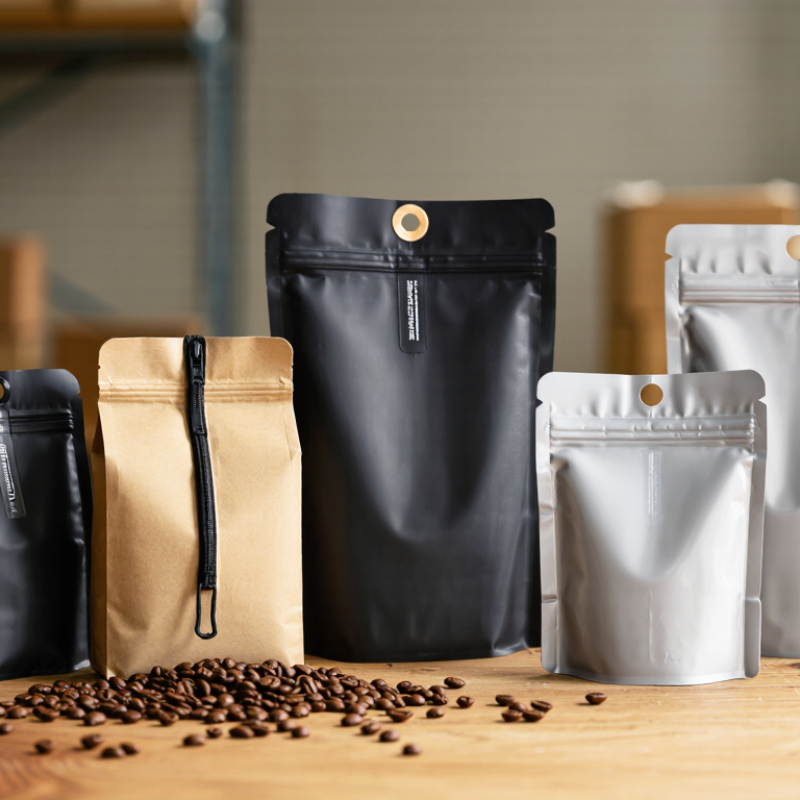
Wholesale coffee buyers can choose bags by shape, barrier performance, and filling process.
Flat-bottom bags stand upright and display well on retail shelves. Side-gusset bags hold larger volumes and use warehouse space efficiently. Quad-seal bags offer strong corners for transport and stacking. Stand-up pouches suit smaller coffee portions and online orders.
They are lightweight, but their shape may feel less premium.
Material options also affect freshness.
Kraft paper laminates provide a natural appearance with a protective inner layer. High-barrier plastic films offer strong protection against oxygen, moisture, and light.
Recyclable mono-material structures can simplify material choices, but buyers should verify local recycling access. Compostable bags may require specific storage conditions and credible certification.
One-way degassing valves help release carbon dioxide from freshly roasted coffee. Zippers, tin ties, and tear notches improve daily use.
I once overlooked valve placement during a packaging trial. The bags looked correct, yet filling became slower.
Small production details matter. Request samples, test sealing temperature, check print alignment, and run a short warehouse trial before placing a large order.
Materials and Barrier Features That Protect Coffee Freshness
2026 Best Coffee Packaging Bags for Wholesale Buyers
Wholesale coffee buyers in 2026 need more than attractive bags. Freshness depends on controlling oxygen, moisture, light, and aroma loss. During packaging reviews, I match the bag structure with the roast level, filling speed, and warehouse conditions. Freshness is fragile. Dark roasts may release substantial gas, so a one-way degassing valve can reduce swelling without allowing outside air inside.
A kraft paper outer layer provides a natural appearance, but it offers limited protection by itself. The inner structure needs reliable barrier films, such as aluminum foil or metallized polyester. Aluminum foil generally provides stronger protection against oxygen, moisture, and light. Metallized film can reduce weight and material use, but performance may vary after folding or sealing. Polyethylene is often used as the inner sealant because it supports dependable heat seals. Small details matter.
For wholesale orders, ask for oxygen transmission rate and water vapor transmission rate data. Request results from finished bags, not only separate films. Check zipper alignment, valve placement, seal width, and puncture resistance. A high-barrier bag can still fail because of a weak seal. I have seen packaging look excellent before filling, then crease near the bottom during transport. That possibility deserves testing. Recyclable structures may reduce material complexity, but they should not be selected from claims alone. Storage trials, drop tests, and roast-specific shelf-life checks provide more reliable evidence.
Bag Formats, Closures, and Valve Options for Different Products
2026 Best Coffee Packaging Bags for Wholesale Buyers
Bag format should follow the coffee, sales channel, and fill line. Flat-bottom bags stand upright on shelves and suit larger retail packs. Side-gusset bags use shelf space efficiently, while pillow bags can work well for high-speed packing. For small-batch or sample products, compact doypacks are easy to handle. The National Coffee Association’s 2024 National Coffee Data Trends report found that 67% of U.S. adults had coffee the previous day. That broad demand makes pack-size planning important, but one format will not fit every buyer or roast.
Closures affect both convenience and repeat freshness. A zipper helps consumers reseal a bag; a tin tie is simple, but may not create as tight a closure. For whole beans, consider a one-way degassing valve that releases carbon dioxide while limiting oxygen entry. Freshly roasted coffee can release gas for days, so valve placement and bag barrier performance matter. Ground coffee usually releases gas faster, but still needs protection from moisture, oxygen, and light. Ask suppliers for barrier specifications and samples filled on your actual equipment.
Tips: Test the filled bag, not just an empty sample. Check seal strength, valve function, zipper alignment, and whether the bag stands upright after shipping. Small defects show up quickly. A good specification can still miss a real production issue.
2026 Best Coffee Packaging Bags for Wholesale Buyers
Commonly available closure and valve options by bag format. A value of 1 indicates that the option is commonly offered for that format; it does not indicate a performance rating.
One-way degassing valves are used primarily for freshly roasted coffee to release carbon dioxide while limiting oxygen entry. Exact options vary by supplier and bag construction; confirm specifications before ordering.
How to Compare Wholesale Specifications, Pricing, and Suppliers
For wholesale buyers, a coffee bag is more than a printed pouch. Compare material structure, thickness, barrier performance, and closure type against your coffee and storage conditions. A resealable zipper helps customers, while a one-way valve may suit freshly roasted whole beans. Ask suppliers for written specifications, not just a sample that feels sturdy.
Check pricing beyond the quoted unit cost. Request a breakdown of setup charges, minimum order quantities, freight, and any fees for changing artwork. Then compare the total cost at the same order volume. Small details matter. Confirm production lead times and ask how defects or shipment delays are handled. A low price can become less attractive if the delivery window is vague.
Request samples from the production process, where possible, and compare seal strength, print alignment, and bag dimensions. Ask for relevant food-contact documentation and test reports, then verify that they match the exact material being quoted. Keep your own notes; supplier answers can sound clearer than they are. I still find that samples alone do not predict every production run, so agree on acceptable tolerances before ordering. A simple written checklist can prevent an expensive misunderstanding.
Sustainability and Regulatory Factors Shaping Coffee Packaging in 2026
2026 Best Coffee Packaging Bags for Wholesale Buyers
Sustainability and Regulatory Factors Shaping Coffee Packaging in 2026
For wholesale buyers, a coffee bag must protect aroma and move through real recycling systems. That is a tricky balance. Multilayer plastic and foil can provide strong oxygen and moisture barriers, but they may be difficult to recycle in common collection streams. The OECD’s Global Plastics Outlook (2022) estimated that only 9% of global plastic waste was recycled in 2019. That figure makes end-of-life claims worth checking, not just printing.
In the European Union, the Packaging and Packaging Waste Regulation entered into force in 2025 and generally applies from August 12, 2026. Its requirements steer packaging toward recyclability, with further design rules expected. Buyers should ask suppliers for material specifications, recycling guidance, and evidence behind environmental claims. A bag labeled “compostable” may not suit local facilities. Small details matter: a valve, zipper, or dark coating can complicate sorting.
Compare options using samples, not only brochures. Check seal strength, roast-date printing, and how the bag performs after transport. Recyclable mono-material structures may reduce material complexity, but barrier performance depends on the coffee, shelf life, and storage conditions. There is no perfect bag yet. A practical choice is one that protects the product and fits the disposal systems available to customers.
Related Posts
-
Innovative Coffee Bag Design Examples and How They Transform Your Brand Strategy
-
Elevate Your Brand: Unleashing Creativity in Coffee Bag Design Trends for 2023
-
Exploring Coffee Packaging Innovations: Challenges in Sustainability and Design
-

Comprehensive Handbook on Industrial Packaging Machines for Modern Businesses
-
5 Essential Tips for Choosing the Right Coffee Packaging Machine for Your Business
-
How to Choose the Right Packaging Equipment for Your Business?